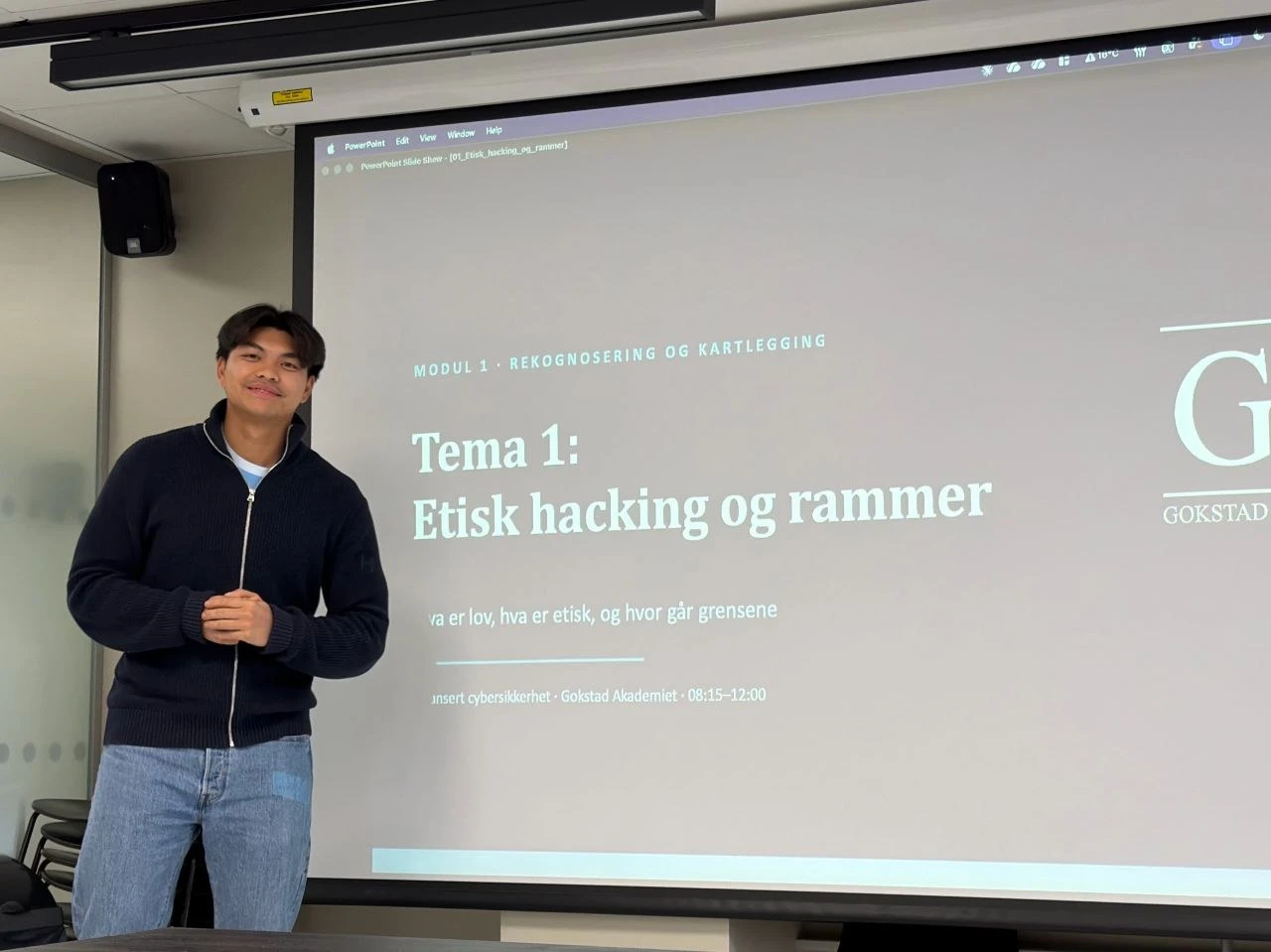

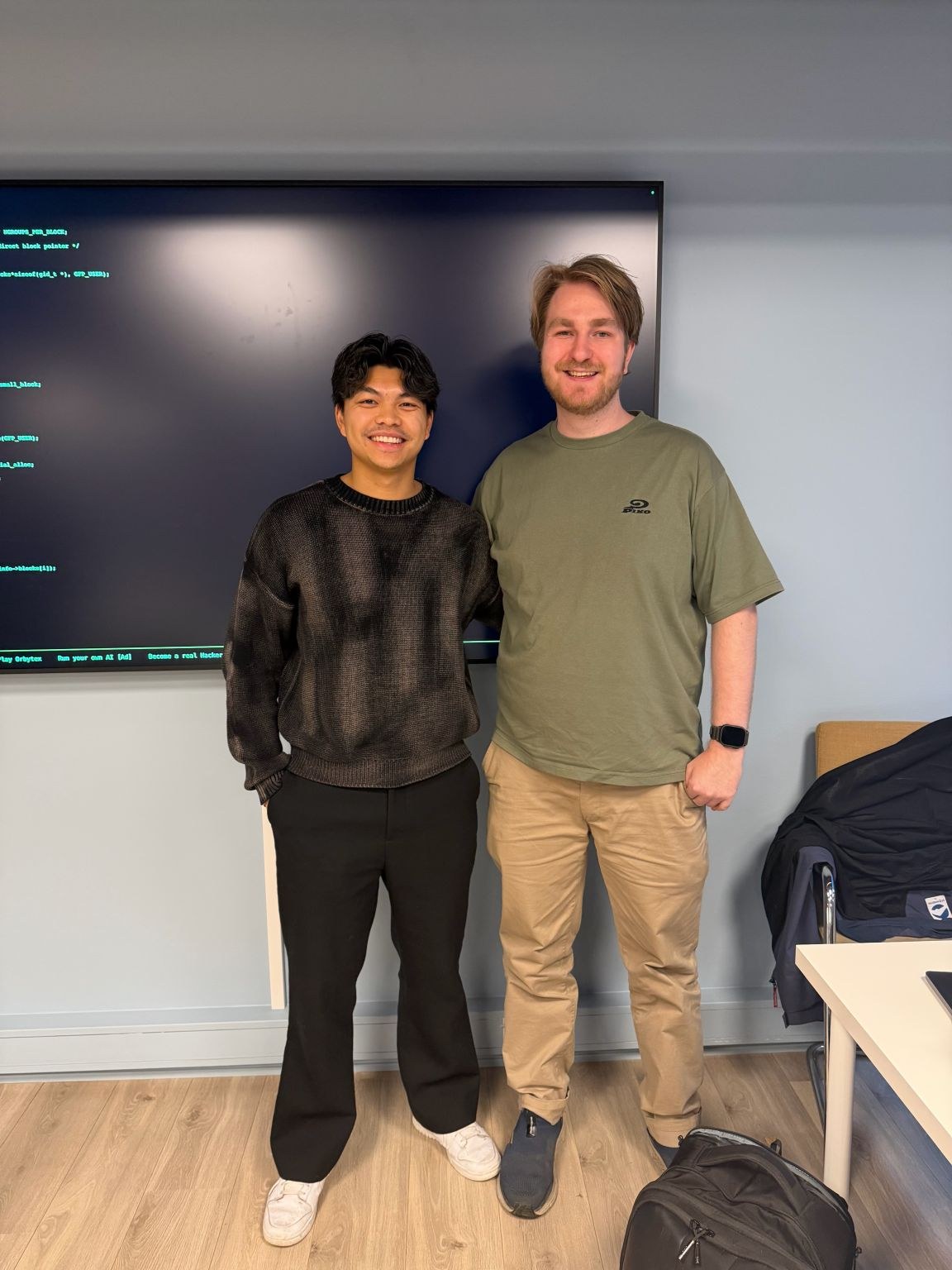
In brief: In November, Kenny Le invited ethical hacker Daniel Christensen to his lecture at Gokstad Akademiet. The subject was where ethical hacking ends and illegal access begins.
A working hacker in the classroom
Kenny Le is a security consultant at FM CyberSecurity, and he lectures in ethical hacking at Gokstad Akademiet in Norway. This time he taught a theme on ethical hacking in the Advanced Cybersecurity course, covering what the law allows and where the limits lie.
Kenny wants his students to see how the subject is practised at work. He therefore asked Daniel Christensen, who works as an ethical hacker, to share experience from the job.
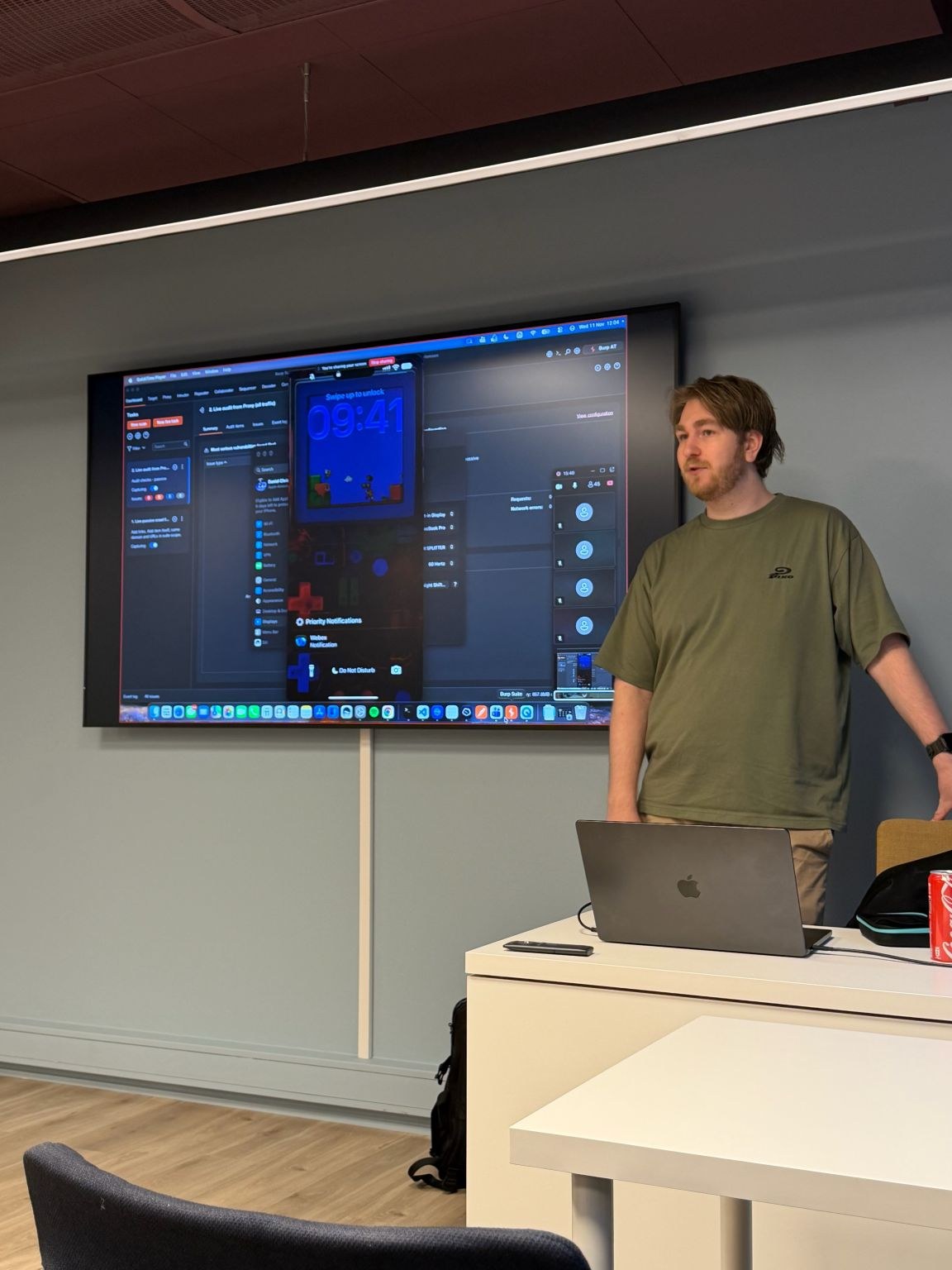
The session went beyond theory. Daniel showed live how easy it can be to hack a mobile app. He also showed how to find vulnerabilities and report the findings responsibly.
What Norwegian law says
The class also discussed section 204 of Norway’s Penal Code, which deals with breaking into computer systems. It sets a fine or up to two years’ imprisonment for anyone who gains access to a computer system, or part of one, by breaching a protection or by other unauthorised means.
The word that decides the matter is “unauthorised”. The law asks whether you had the right to gain access, and good intentions do not change the answer. Someone who tests a system without the owner’s permission can therefore break the law even when the aim is to find security holes and report them. Norwegian law has no specific exception for security research carried out in good faith.
AI makes the question more pressing
AI is making it steadily easier to find and exploit vulnerabilities, even for people with little technical knowledge. The class therefore discussed whether the law is keeping up, and whether ethical hackers should have better legal protection.
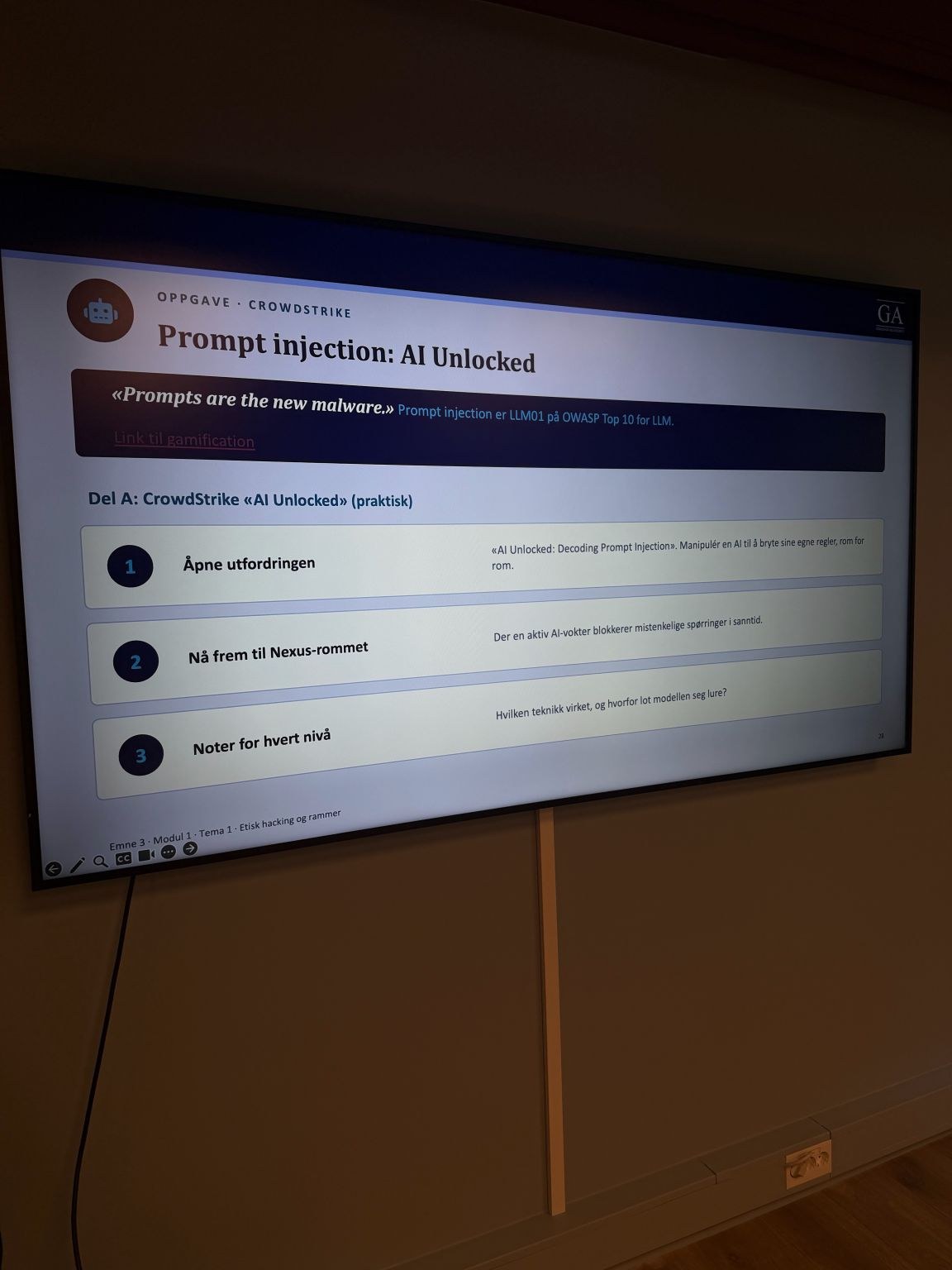
AI is part of the teaching as well. One of the tasks in the theme is CrowdStrike’s “AI Unlocked”, where students practise prompt injection, which means manipulating an AI model into breaking its own rules. Prompt injection is listed as LLM01 in the OWASP Top 10 for LLM, a list of the most serious security risks in applications built on large language models.
Permission comes first
The same principle applies when you commission a security test. A penetration test requires written permission from the owner of the system, as we explain in our article on what a penetration test finds and how to prepare.
At FM, Kenny works on penetration testing with Fredrik Standahl, who leads the work, and Christian Vik. We thank Daniel Christensen for taking the time to visit the students.