
In brief: Customers, auditors and regulations increasingly ask for evidence that your systems have been tested. A penetration test shows what an attacker could actually achieve and what you should fix first. This article explains what the test finds, how to prepare for it, what the report should contain and how AI is used in our tests.
What is a penetration test?
A penetration test, often shortened to pentest, is an agreed test in which testers look for weaknesses by trying to exploit them. It shows how far an attacker could get in your systems and which weaknesses matter most.
The US National Institute of Standards and Technology (NIST) describes penetration testing as security testing in which assessors mimic real-world attacks to identify ways of circumventing the security features of an application, system or network. The definition comes from NIST SP 800-115, the institute’s guide to technical security testing.
The testers use the tools and techniques that attackers use. What sets them apart is the agreement. You have decided what is tested, when it happens and how far the testers may go.
How does a penetration test differ from a vulnerability scan?
A vulnerability scan uses automated checks to list known weaknesses. A penetration test establishes whether those weaknesses can be exploited and what an attacker would gain from them.
The PCI Security Standards Council, which sets the security standard for the payment card industry, compares the two in its penetration testing guidance. A scan identifies, ranks and reports vulnerabilities and typically takes seconds or minutes per system. A penetration test is a manual process that may use scanning and other automated tools along the way, and an engagement can last days or weeks.
You need both. Scanning covers a lot of ground and can be repeated often, while a penetration test goes deep within an agreed scope. We cover scanning in more detail in What vulnerability scanning finds and how to use the results.
What types of penetration test are there?
The most common types are external tests, internal tests, web application tests and cloud tests. The type tells you where the tester starts and what the target is. Many engagements combine several.
- External test: The tester attacks from the internet against whatever you expose to the outside. That includes remote access such as VPN.
- Internal test: The tester starts inside the network and finds out how far an attacker could get from there, for example after an employee has been tricked or a laptop compromised.
- Web application test: The tester works through login, access control, APIs and business logic in an application. The UK National Cyber Security Centre (NCSC) notes in its penetration testing guidance that looking for vulnerabilities in bespoke software is most common in web applications.
- Cloud test: The tester examines what you have built and configured with a cloud provider. The provider’s own infrastructure is not yours to test.
Cloud providers publish their own rules for testing. AWS permits testing of a list of services without prior approval and prohibits denial-of-service attacks. Microsoft requires testing to stay within your own tenant or assets you have explicit authorisation to test. Read your provider’s rules before the scope is set.
What does a penetration test find?
A penetration test finds weaknesses that can be exploited in practice, and it shows how several weaknesses can be combined. According to NIST, most tests look for such combinations because they can give more access than a single vulnerability.
The PCI Security Standards Council gives SQL injection, privilege escalation, cross-site scripting and deprecated protocols as examples of findings. In an application, the test examines among other things whether the separation between customers holds and whether administrator functions are protected.
The test has limits too. The NCSC points out that a penetration test can only confirm that your systems were not vulnerable to known issues on the day of the test. Your application changes with every release, so the test should be repeated after major changes.
How do you prepare for a penetration test?
You prepare by agreeing the scope, permissions, rules of engagement, contacts and test window in writing before anything starts. Good preparation decides whether the report answers what you need to know.
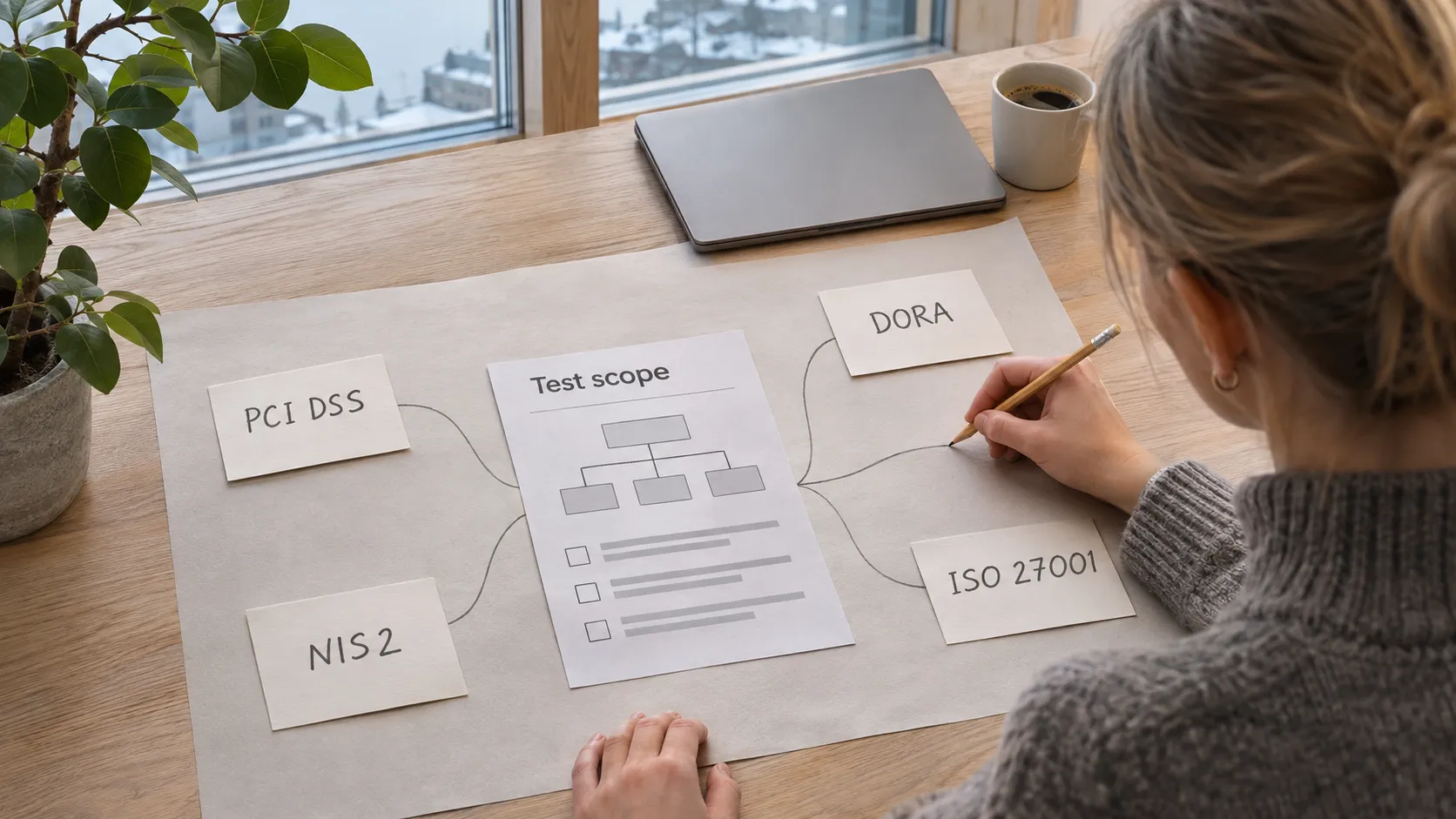
- Scope: Decide which systems, applications and environments are to be tested, and write down what is left out. Tie the scope to the requirement the test is meant to meet. Our article on which regulations require recurring penetration tests helps with that.
- Permission: The owner of the system must give written permission. In Norway, unauthorised access to a computer system is a criminal offence under section 204 of the Penal Code. Systems that belong to a third party need that party’s permission.
- Rules of engagement: These set out how far the testers may go in exploiting a finding. They should also say how sensitive data is handled and what happens if the testers discover a real intrusion.
- Contacts: Agree who the testers alert about critical findings and who on your side can stop the test. Decide as well whether the people who monitor your systems should know about the test in advance.
- Test window: Agree the dates and hours. Tell the testers about legacy systems that cope badly with automated testing, and whether the test runs in production or in a test environment.
The PCI guidance contains a list of questions the rules of engagement should answer. It is useful even when the test has nothing to do with payment cards.
What should the report contain?
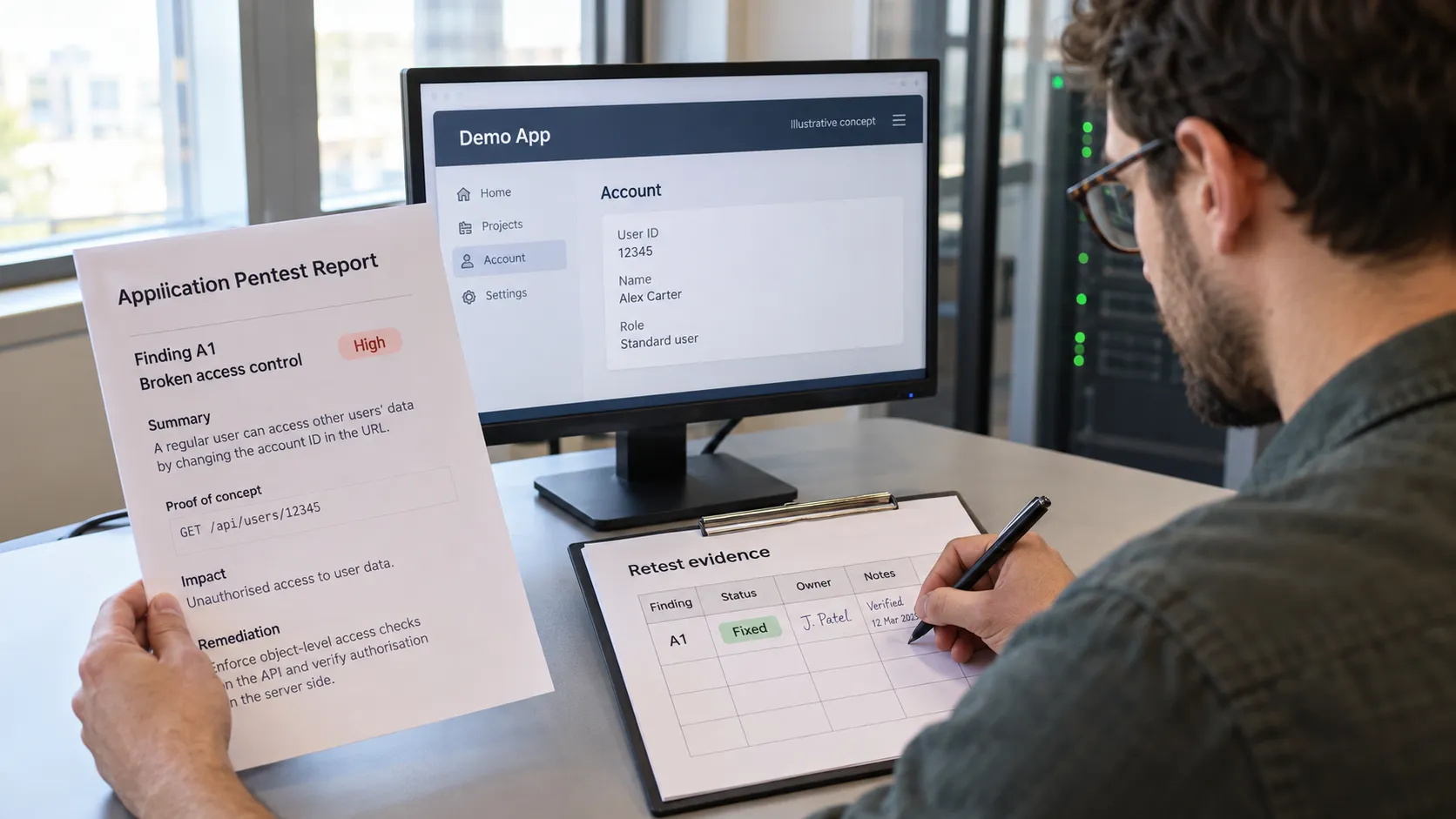
The report should show what was tested, how it was tested, what was found and how each finding can be fixed. A manager should be able to read the summary, and a developer should be able to fix from the detail.
The PCI Security Standards Council recommends these parts:
- an executive summary of the scope and the major findings
- statements of scope, methodology and limitations
- a narrative of how the testing progressed
- the findings, with severity, affected systems and how each weakness can be exploited
- the tools used
- what has to be cleaned up after the test, such as test accounts
The NCSC adds that the report should propose a way of resolving each issue. Keep the report together with the remediation tasks and the retest results. How the evidence is used with an auditor is covered in our article on pentest evidence in ISO 27001 work.
How is AI used in penetration testing?
AI is used to work through many test steps faster and to assess the findings afterwards. In our tests, the consultants set the scope and steer the test, and the AI tools work within the limits they are given.
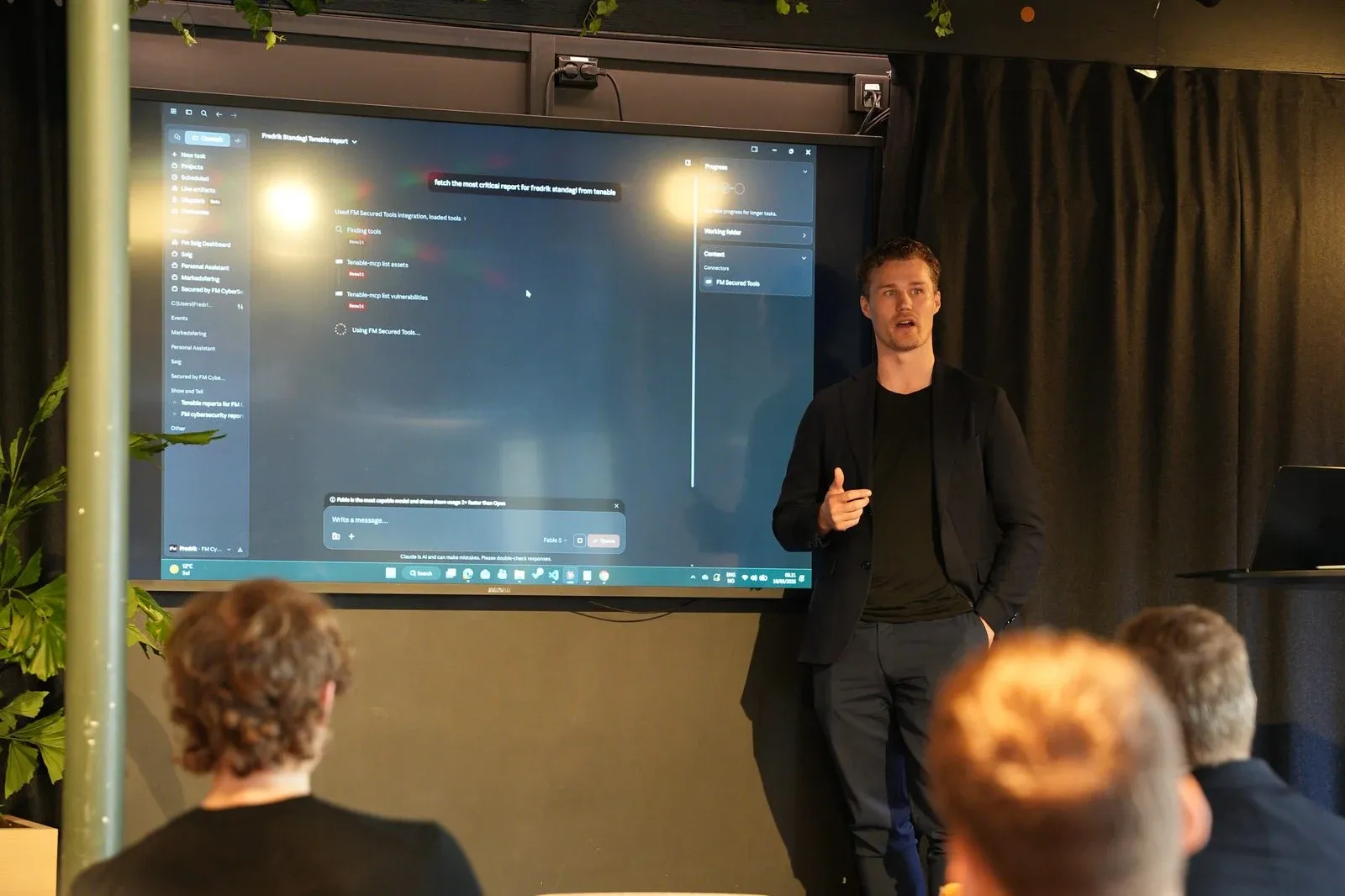
We use ARTEX and HexStrike AI in the test itself. Both connect an AI model to security tools that testers already rely on. The model proposes the next step, the tool carries it out and the result goes back to the model. We describe the tools in FM CyberSecurity works with ARTEX and HexStrike AI.
The tools are used only on systems you own, and by agreement with you. ARTEX is an open-source framework for penetration testing, and attackers have adopted it too. The FBI describes the framework and the attacks in an alert dated 13 November 2026. That makes it useful to know what tools of this kind find in your systems.
Claude Mythos has a different job. Anthropic’s model finds vulnerabilities in code and helps us validate and prioritise the findings. It never runs the attack.
We use the model through Anthropic’s Cyber Verification Program. The programme gives approved security organisations access to Anthropic’s most capable models, Claude Mythos among them, for work such as analysing and validating vulnerabilities. There is more on our approval in our article on the Cyber Verification Program.
We write the report ourselves.
Who can you contact?
Fredrik Standahl leads our penetration tests, together with Christian Vik and Kenny Le. They can help you set the scope, run the test and go through the findings with your developers.
The size of the engagement depends on how many systems are to be tested, how complex they are and which requirement the test is meant to meet. We settle that in a conversation before we make an offer.
Read more about our penetration testing and application security services, or email [email protected] and Fredrik will get in touch.
The cover image is an AI-generated editorial illustration. Screens and documents are illustrative concepts.