
In brief: A small number of accounts in your business can change systems, create users and delete data. Privileged access management (PAM) is the set of controls and tools that decide who may use those accounts, when and for what. This article explains what a privileged account is, what PAM controls and when you need it.
What is PAM?
PAM is the management of access to accounts with elevated rights. Palo Alto Networks describes it as a framework and a set of technologies that secure, monitor and control privileged access, in its explanation of privileged access management.
In practice, passwords and keys are kept in a vault, access is granted for a defined task, and a record is kept of how the accounts are used.
The abbreviation covers both the discipline and the products that support it. A PAM solution is a tool, while a PAM programme also includes the routines, the ownership and the follow-up.
What is a privileged account?
A privileged account is one that can do more than an ordinary user. It might change how a system is configured, administer other users or extract large amounts of data.
Palo Alto Networks sorts these accounts into two groups. The first is used by people:
- domain administrators, with broad access across the network
- local administrators on a single machine
- emergency (break-glass) accounts, which give administrative access when something has failed
- business users with access to sensitive finance or HR systems
The second group is used by software and services. It includes service accounts, application accounts, SSH keys and API keys. These accounts sign in with no person involved, and they are often missing from the inventory.
What does PAM control?
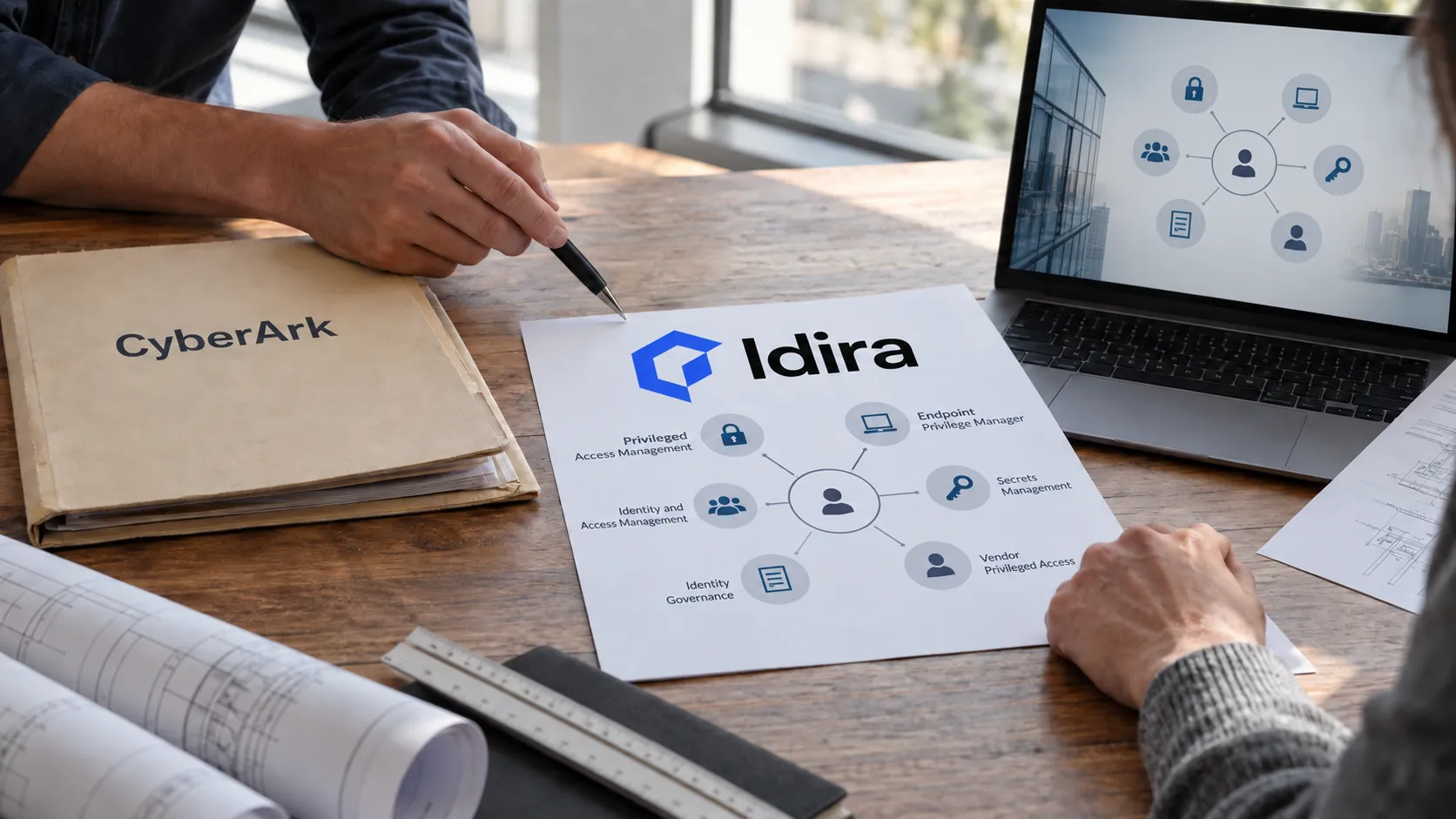
PAM controls four things: where credentials are stored, what happens in a session, how long access lasts and how far it reaches. The points below use Idira (CyberArk) Privileged Access Management as an example of how one platform describes them.
Vaulting and rotation. Passwords and keys are stored encrypted in a vault and changed automatically. The administrator does not need to see the password, because the solution injects it into the session.
Session control. Administrators connect through the PAM solution. The session is isolated from the rest of the environment, and sensitive sessions are recorded, so you can later establish who did what.
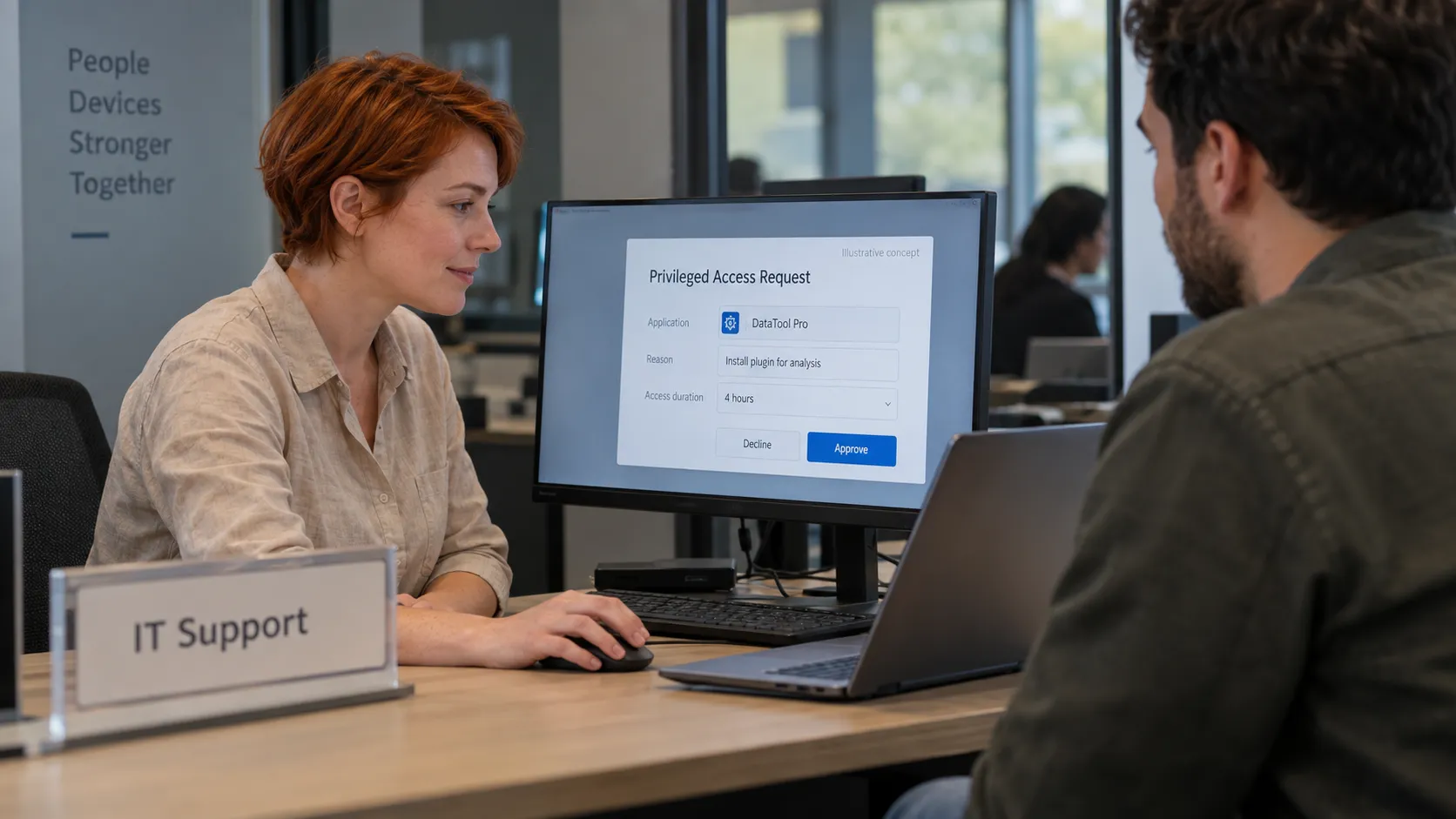
Just-in-time access. Rights are granted when a task needs doing and expire when it is finished. Idira distinguishes just-in-time access, where an existing entitlement is switched on for a window, from zero standing privileges, where nobody holds entitlements by default.
Least privilege. Each user receives only the access the role requires. A technician who has to restart a service should not also be able to delete a database.
On employees’ own computers, least privilege is handled by a separate tool, which we cover in our article on endpoint privilege management.
Why do privileged accounts need their own controls?
Privileged accounts are treated separately because misuse has far greater consequences than it has for an ordinary account. Someone who obtains a domain administrator account can make sweeping changes with little to stop them.
Ordinary access management answers who may sign in to which systems. PAM also answers what happens to the credential itself and what the account is used for after sign-in.
Public guidance takes the same view. The Norwegian National Security Authority (NSM) recommends in its basic principles for ICT security (in Norwegian) that end users are not given administrator rights, that accounts with domain administrator rights are used for a minimum of operational tasks, and that people who need elevated rights have two separate accounts.
The records are useful in audits as well. An auditor assessing a business against ISO 27001 or NIS2 will ask who holds privileged access and how it is used.
When does a business need PAM?
You need PAM once you can no longer say with confidence who used an administrator account and what they did with it. That point often arrives earlier than expected.
These are common signs:
- Several people share the password to the same administrator accounts.
- Service account passwords are rarely changed, because nobody knows what would stop working.
- Vendors and external administrators have permanent access over a VPN.
- A customer, an auditor or an insurer asks for evidence of how privileged access is managed.
- The business falls under requirements such as NIS2, or is working towards ISO 27001.
Headcount matters less than the number of systems and who administers them. A small business with a lot of infrastructure and several vendors can have a greater need than a large one with few systems.
Who delivers PAM projects in Norway, and how do you choose a platform?
PAM projects in Norway are delivered by consultancies that partner with the platform vendors, and in some cases by the vendors themselves. FM CyberSecurity is a certified partner of Idira (CyberArk). We resell the licences and services, and our consultants have expertise in the products and are ready to help.
Idira (CyberArk) is the platform from Palo Alto Networks, which introduced Idira on 12 May 2026 with CyberArk as its foundation. Our article CyberArk is now Idira explains the name change.
Other platforms exist. Microsoft offers Privileged Identity Management in Microsoft Entra ID, which provides time-based and approval-based activation of roles in Microsoft Entra ID, Azure and other Microsoft services. Delinea offers Secret Server, which the company describes as a vault for securing, monitoring and auditing privileged accounts.
When you compare platforms and providers, put the same questions to each of them:
- Which accounts does the solution cover: administrators, service accounts, cloud services and vendor access?
- How does it handle password changes for accounts used in several places?
- Is it delivered as a cloud service, or will you run it yourself?
- How does emergency access work if the vault is unavailable?
- Who in your business will own the solution after the project, and what support does the partner offer?
- Which certifications do the consultants doing the work hold?
The cost of a PAM project depends on the number of accounts and systems, the deployment model and how much of the work you do yourself. It is worth settling the scope in a conversation before you ask for a quote.
What should you do now?
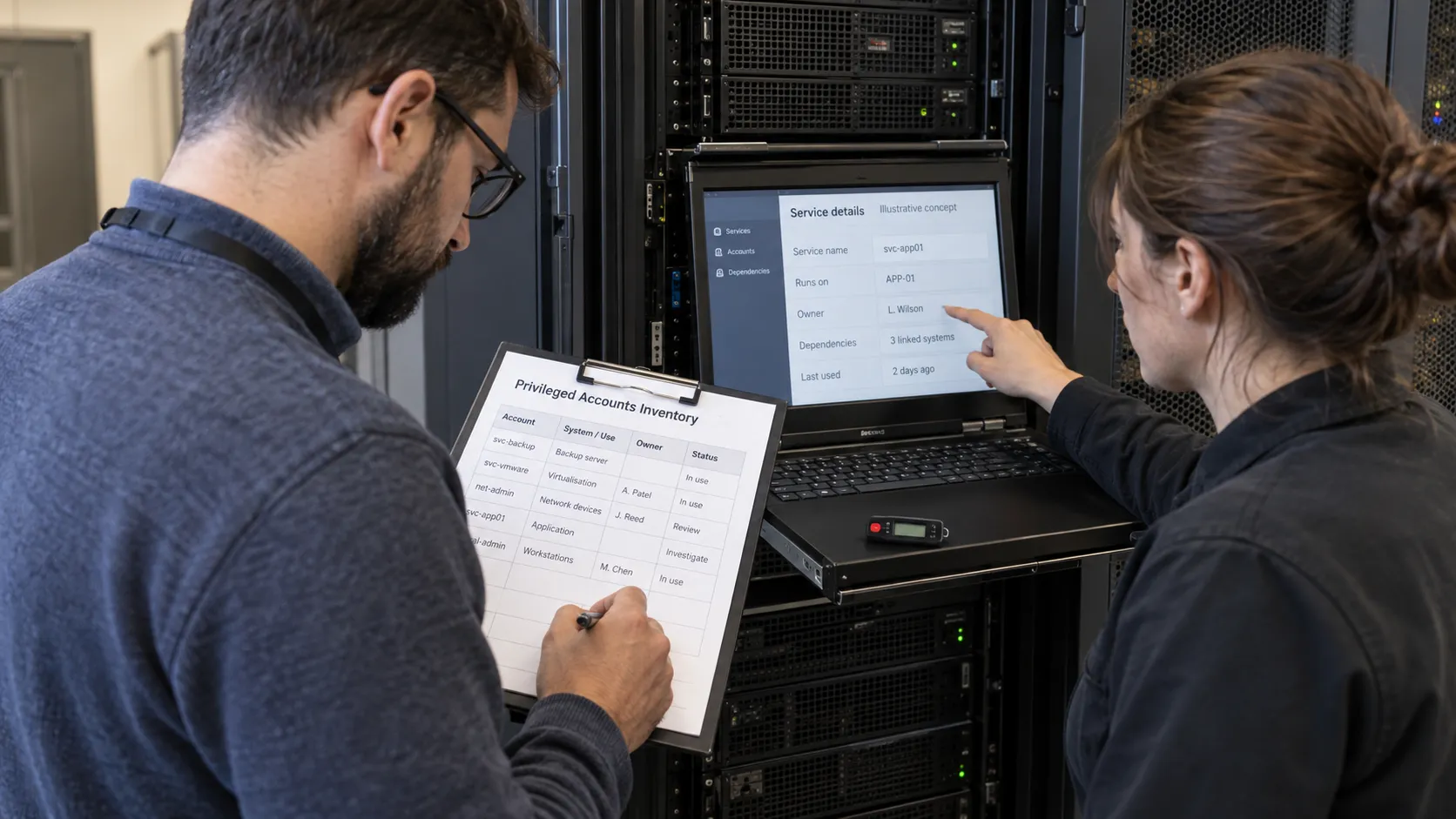
Start with an inventory of the privileged accounts you have and who owns them. It shows where the risk is greatest, and it is useful whichever platform you choose.
Our guide How to start a privileged access management programme takes you through the account inventory, the dependencies and emergency access step by step. What we assist with is set out on our pages for privileged access management (PAM) and identity.
Robin Kvernevik leads our work with Idira (CyberArk) and identity. Contact Robin at [email protected] if you would like to go through the privileged accounts you have and where it makes sense to begin.
The cover image is an AI-generated editorial illustration. Screens and documents are illustrative concepts.