CyberArk is now Idira: what to check after the name change
Palo Alto Networks introduced Idira in May 2026. Here is how to navigate the new name, existing CyberArk documentation and licence questions.

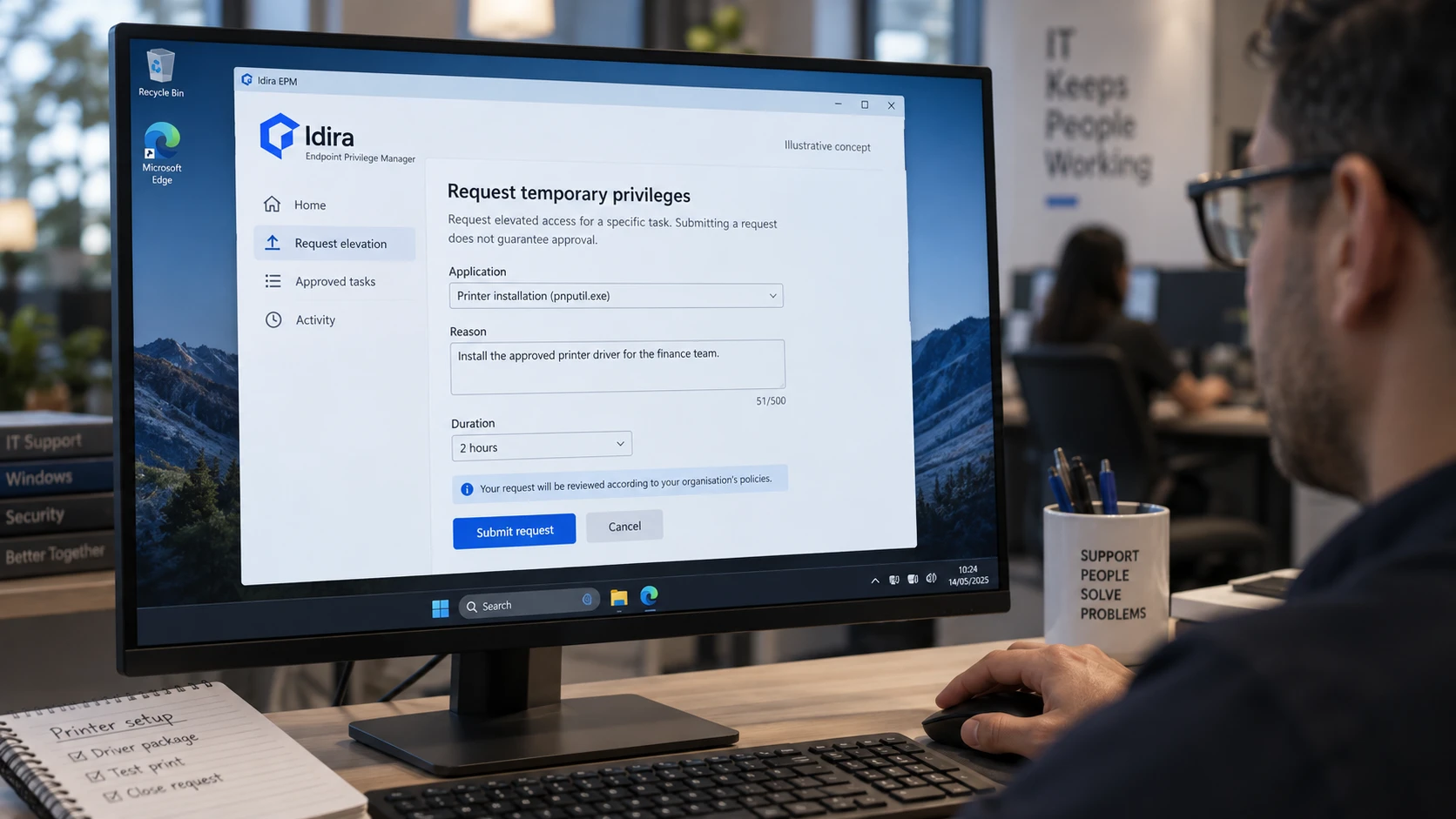
The cover image is an AI-generated editorial illustration. Screens and documents are illustrative concepts.
Palo Alto Networks introduced Idira on 12 May 2026, building its identity security platform on CyberArk. If a product or document you knew as CyberArk now says Idira, that is the reason.
The announcement includes expanded capabilities as well as a new name. It should not be read as a promise that every customer receives every feature without an additional licence.
Start with the product you already use
The main identity capabilities remain recognisable in the Idira portfolio:
| Area | Name to look for |
|---|---|
| Privileged administrator access | Privileged Access Management |
| Elevation on endpoints | Endpoint Privilege Manager |
| Workforce sign-in and access | Identity and Access Management |
| Application secrets | Secrets Management |
| Access reviews and governance | Identity Governance |
| External administrator access | Vendor Privileged Access |
Use the actual module and deployment type when asking about an upgrade. “We have CyberArk” does not identify whether the question concerns a self-hosted vault, a SaaS service or an endpoint agent.
Older names can remain in documentation, installation paths and operational records. Keep the former name alongside the new one where it helps staff find the right runbook. FM’s product pages retain their existing addresses for the same reason.
Check entitlements separately from branding
The launch announcement distinguishes between existing SaaS packages. Some improvements are included; additional agentic and machine identity capabilities may require new licences. Check your order and the current entitlement details rather than inferring coverage from a console’s branding.
A rename also does not settle tenant addresses, support arrangements or migration steps for every installation. Confirm those through your established account and support channels. Do not change an operational endpoint merely because a marketing page has moved.
Update the records people rely on
Review supplier records, service desk categories and documentation links. Preserve enough naming history to connect older contracts and evidence to the current service. A difference in names is something to explain, not automatically an audit failure.
For a planned project, keep the discussion centred on access requirements: which accounts need protection, how credentials are used and who will operate the controls. The PAM planning guide covers those decisions. They remain necessary regardless of the label on the platform.