CrowdStrike reports AI agents making decisions during attacks
New research describes attackers delegating decisions and commands to AI agents.
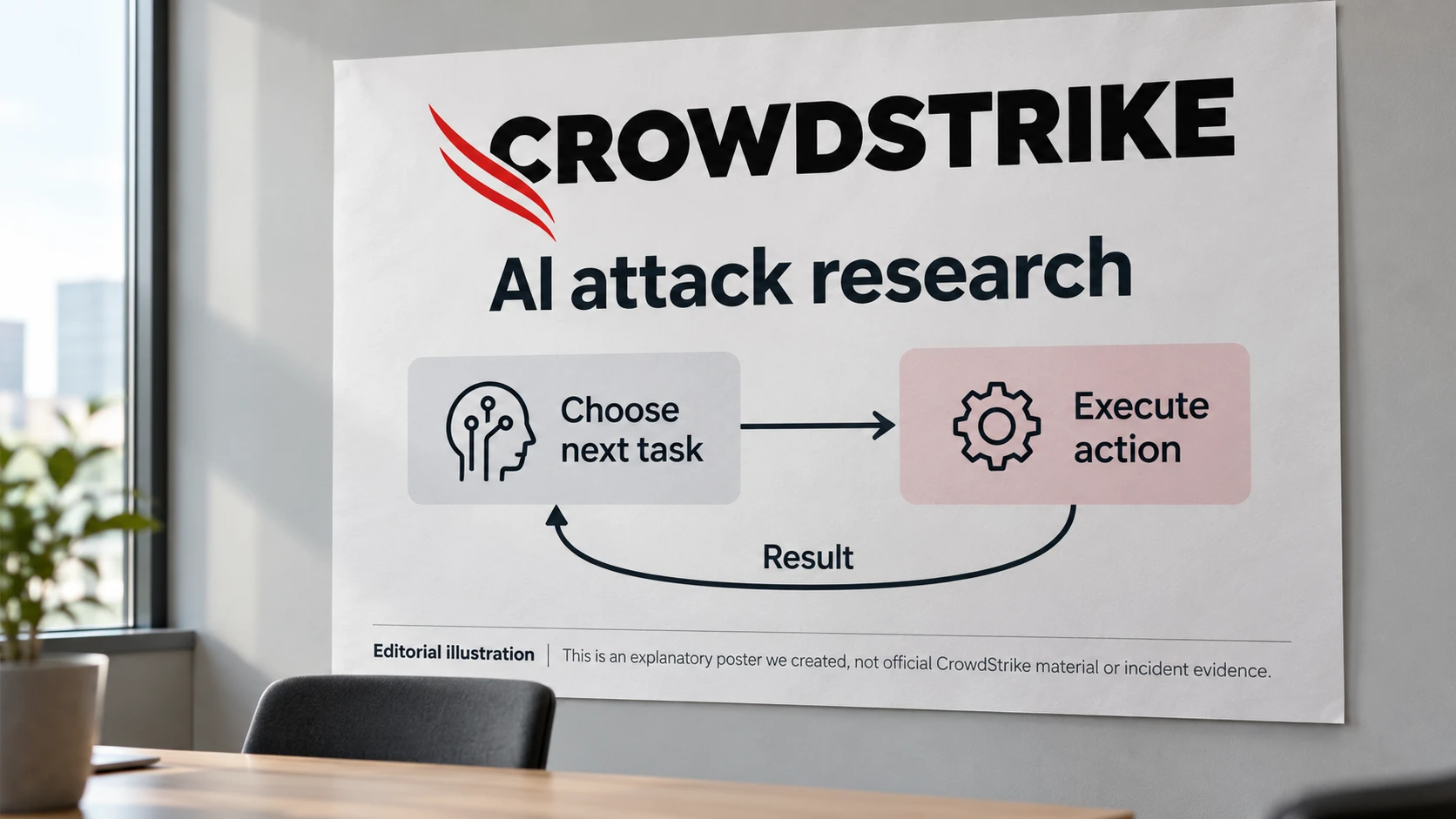
In brief: CrowdStrike’s 21 October research describes four previously unreported attackers using AI agents in intrusions. The agents made decisions and executed commands.
The findings concern activity documented between May and August 2026. In one setup, a supervising agent chose a task and another performed it. Elsewhere, an operator still had to intervene when the agent stalled or refused.
What does it mean for an agent to make decisions?
Consider the difference between asking software to explain an error and allowing it to choose and run the next diagnostic step. In the first case, a person reads the answer and acts. In the second, the software can continue the work itself.
An AI agent combines a model with tools that act on a computer or service. Its scope depends on which tools it has and what those tools are allowed to do. A decision inside that scope might be small, such as choosing the next check, while still removing a step that previously required a person.
This is why “AI was used” tells us less than “AI selected and carried out the next action.”
Automation does not mean complete independence
A person can set the objective and provide the tools while delegating individual decisions. The resulting system can do meaningful work without being independent at every stage.
For Norwegian business leaders, that distinction makes reporting on AI hacking easier to interpret. The useful question is which parts of the operation were delegated: writing code, selecting actions, executing them, or several of these together. Those are different capabilities.
Our earlier article on ARTEX covers another investigation into AI tooling used during intrusions.