What does Falcon Guardian's AI Kill Switch actually stop?
The switch cuts off access to an AI model through a connected gateway. Ending the program that runs the agent is a separate step.
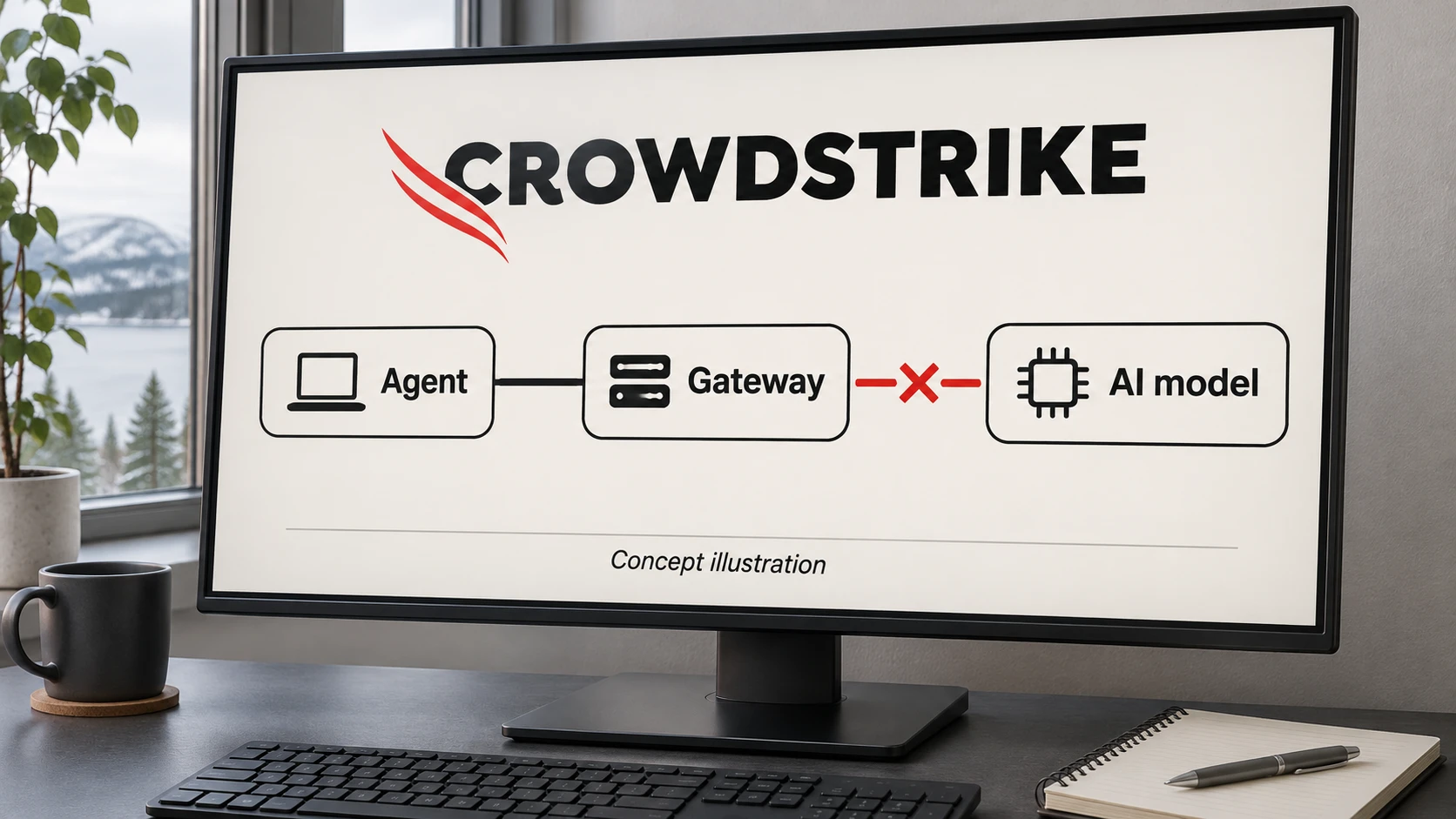
In brief: CrowdStrike’s AI Kill Switch lets a security team cut off an agent’s access to an AI model through a connected gateway. The program running the agent can still be open.
Imagine an agent sorting documents into customer folders. It reads a document, asks a model where it belongs, then moves the file. Halfway through, an employee notices that documents are going into the wrong folders. At that point, it matters which part of the job the security team can interrupt.
Where the switch takes effect
At Fal.Con Europe on 3 November, CrowdStrike introduced the switch as part of Falcon Guardian, its security product for AI use in businesses. The switch works at the gateway: the service that passes requests from an application to a model. Guardian can instruct Falcon AI Gateway or a connected third-party gateway to deny model access.
In the filing example, the next request for a folder name would no longer reach the model through that gateway. That interrupts a task that needs another answer. It does not put files already moved back where they were, or cancel a file operation already handed to another program.
CrowdStrike’s technical description distinguishes this gateway control, available at launch, from planned capabilities such as ending the agent’s process on a computer and preventing it from restarting. Blocking the next model request and shutting down the software that made it are two different actions.