AI-assisted scripts target Siemens controllers: check the access paths
An NSA-led advisory describes reconnaissance against Siemens PLCs. Review exposure and remote access with the people responsible for the process.
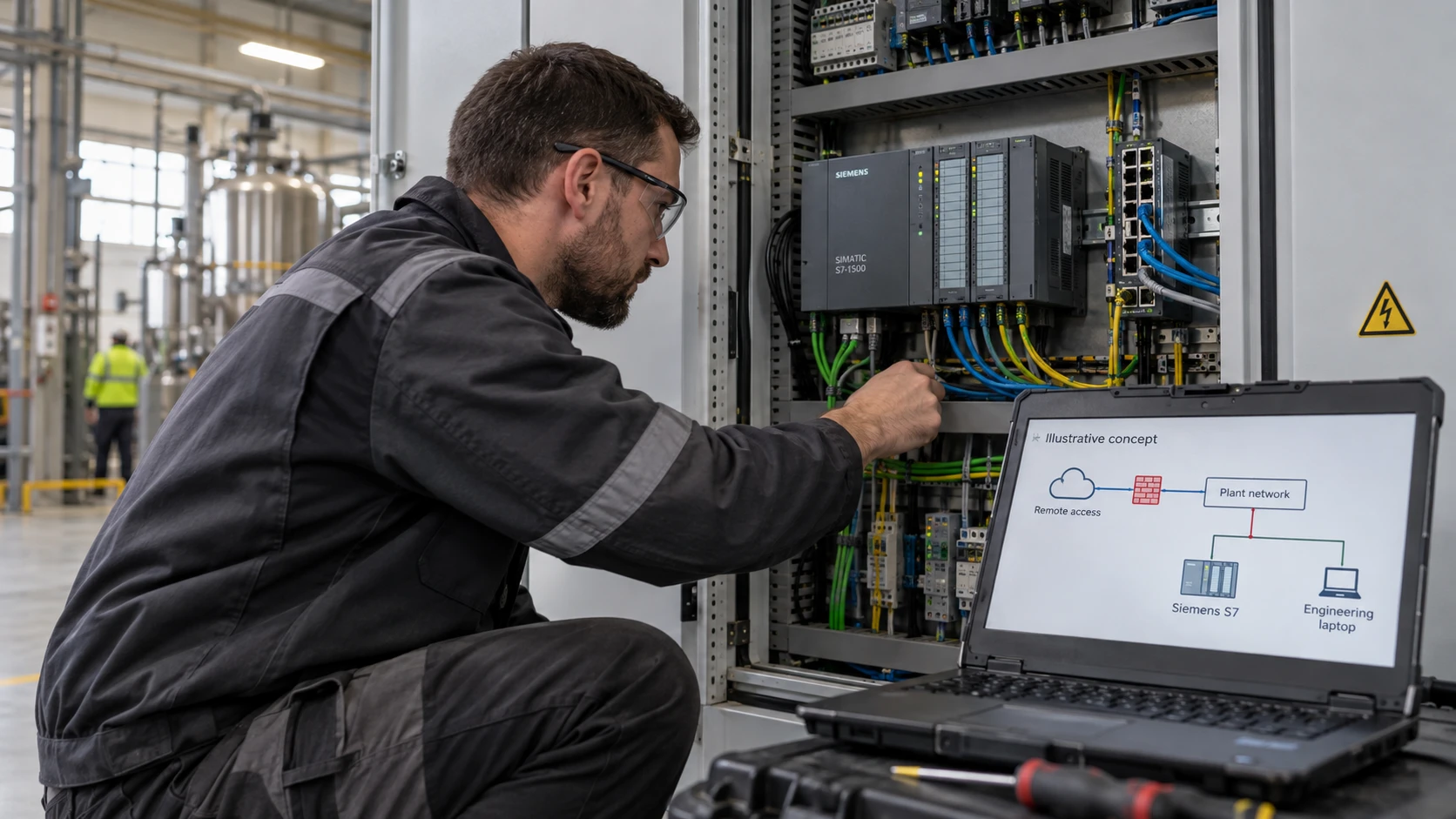
The cover image is an AI-generated editorial illustration. Screens and documents are illustrative concepts.
An NSA-led advisory announced on 19 August describes targeted reconnaissance and capability development against Siemens S7 programmable logic controllers. It says actors are using AI-generated scripts disguised as monitoring tools.
The distinction between preparation and confirmed disruption matters. The announcement warns of possible consequences for industrial processes; it does not establish that every listed consequence has occurred.
Start with access to the process
For an operator, the immediate question is which routes can reach a controller. Include remote support, supplier connections and cellular links, not just the office firewall.
We recommend reviewing these paths with the engineers responsible for the plant. Check whether external access is necessary, how it is restricted and who can change the configuration. A connection installed for maintenance can remain in place after the original need has passed.
Do not run an unplanned active scan against production controllers. Establish a safe assessment method with the operator and equipment supplier. A security check should not become an unexpected process interruption.
Make changes the plant can support
Where direct exposure is unnecessary, plan its removal. Review remote-access authentication and account ownership, and restrict access to the systems required for the job. Confirm that emergency maintenance will still be possible through the approved route.
Monitoring should have an operational owner too. Who recognises an unexpected configuration change? Who can judge whether disconnecting a device would create a larger problem? What evidence is needed before restoring it?
AI assistance is relevant because it can change how an attacker prepares and adapts tooling. It does not remove the need to understand the controller, its configuration and the physical process. Defenders need that understanding just as much.
For Norwegian facilities, the practical response is a documented review of reachable equipment and authorised access, agreed with the people who keep the process running.