CrowdStrike brings AI data classification onto the device
CrowdStrike's latest data-security update raises practical questions about hardware, Norwegian-language documents and the controls around AI uploads.
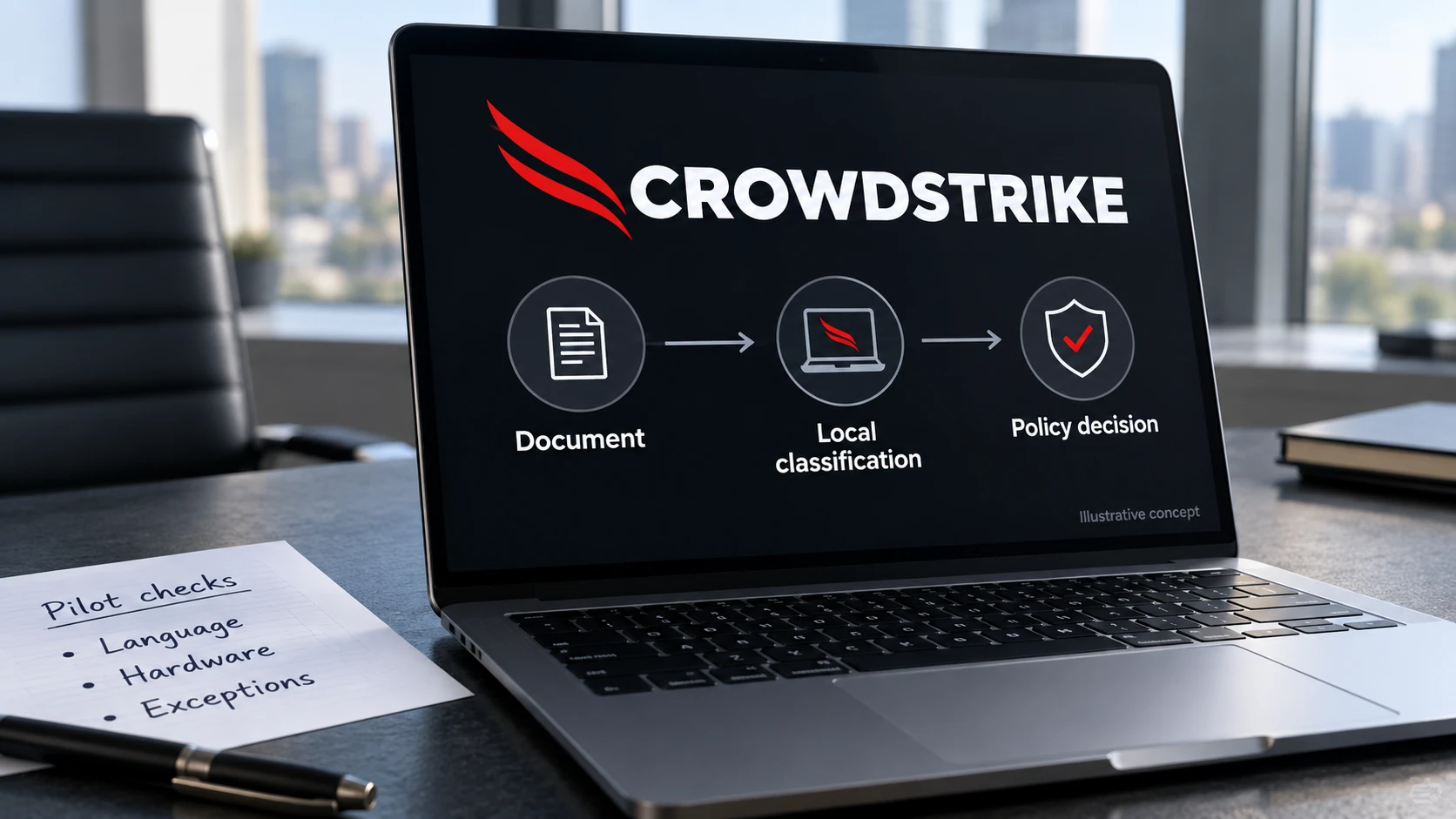
The cover image is an AI-generated editorial illustration, not a product screenshot.
CrowdStrike’s 16 September engineering update describes language-model classification in Falcon Data Security running locally on Intel Core Ultra AI PCs, using the NPU. It extends rule-based classification to assess sensitive content by meaning and context. The company describes Apple Neural Engine support as work it is bringing to macOS; that wording does not confirm Mac availability.
For Norwegian businesses introducing AI assistants, the useful question is whether a control can recognise sensitive material in the documents employees actually use. A recognisable account number and a paragraph discussing a confidential customer matter require different evaluation cases.
Start with the fleet and the language
Ask for the supported processor generations, operating systems, sensor versions and licences in writing. Establish what happens on older laptops and devices without the required accelerator. A successful demonstration on one new PC should not become a coverage claim for the entire fleet.
Then build a small, labelled evaluation set with synthetic content. Include Norwegian and English, mixed-language support tickets, short fragments, long documents and harmless material that looks sensitive. Keep genuine customer records out of an initial demonstration.
Decide the expected classification before running each case. Record misses and false alarms separately. Also check how much a large document delays the employee’s task. Neither a fast result nor a confident classification is enough on its own.
Classification still needs an action
A sensitivity label does not explain what happens when someone pastes the content into an AI assistant. Specify the destinations and actions the policy covers, whether a warning or block is expected, and who may grant an exception.
Ask what evidence leaves the device for alerts and investigation. Local model execution alone is not a complete description of the product’s telemetry or data handling. Have the supplier explain those flows separately.
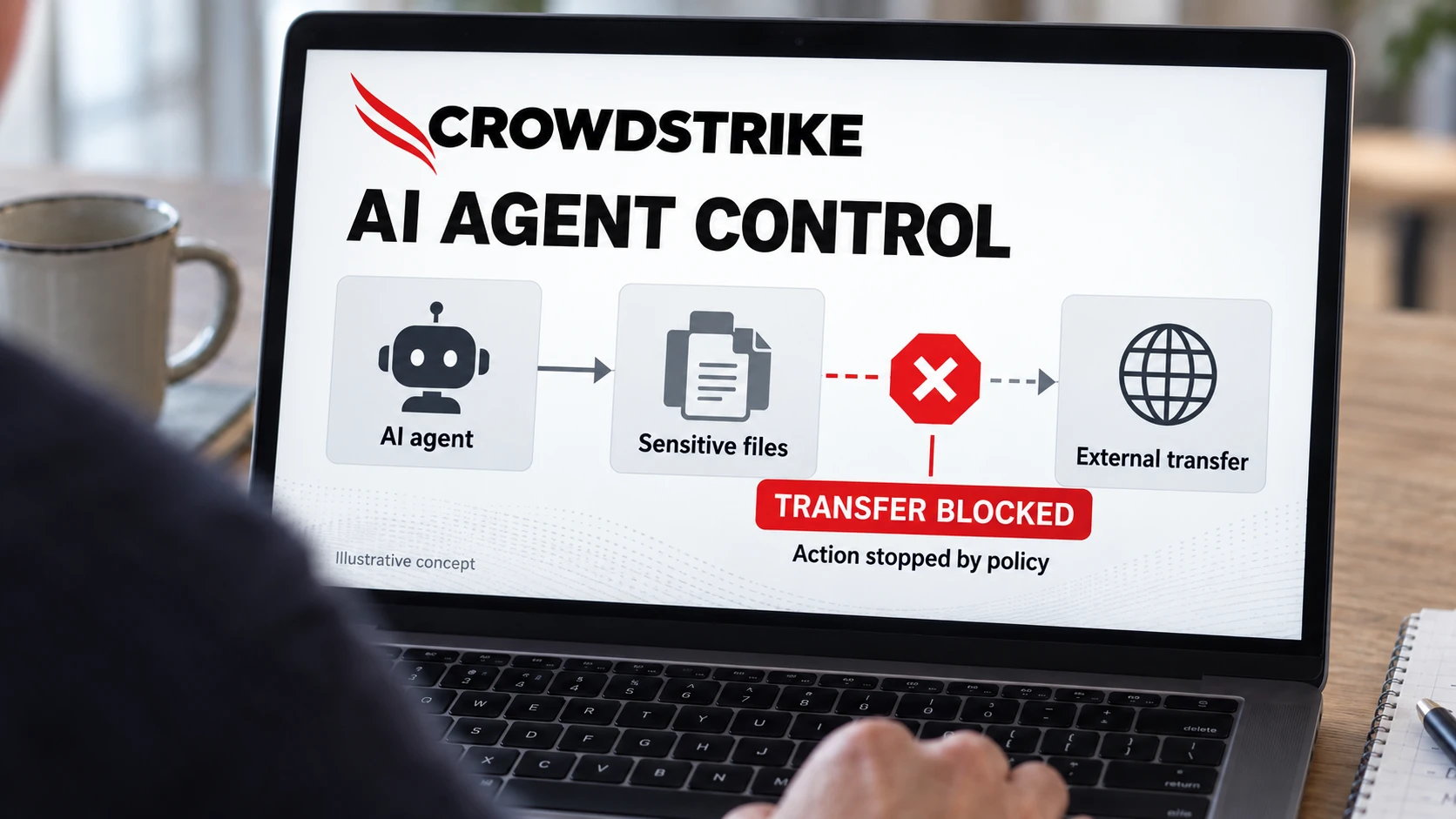
The external attack scenario belongs in the same review: what if a compromised account or manipulated agent attempts the transfer? Test the relevant path rather than assuming that a rule exercised through a browser also covers an agent’s tool call.
Keep Data Security and Guardian claims separate
This update concerns Falcon Data Security. CrowdStrike describes Guardian as connecting supported AI-agent activity with endpoint execution. Those descriptions address related problems, but do not establish that the new local classifier is included in every Guardian licence or protects every AI workflow.
Use the Guardian assessment to frame the coverage discussion. The acceptance decision should rest on your device mix, language examples and actual transfer paths—not on the presence of an AI chip in the laptop.