Planning your first vulnerability assessment in Tenable One
A useful first assessment establishes coverage, validates findings and assigns remediation. Agree the scope and scan conditions before collecting results.
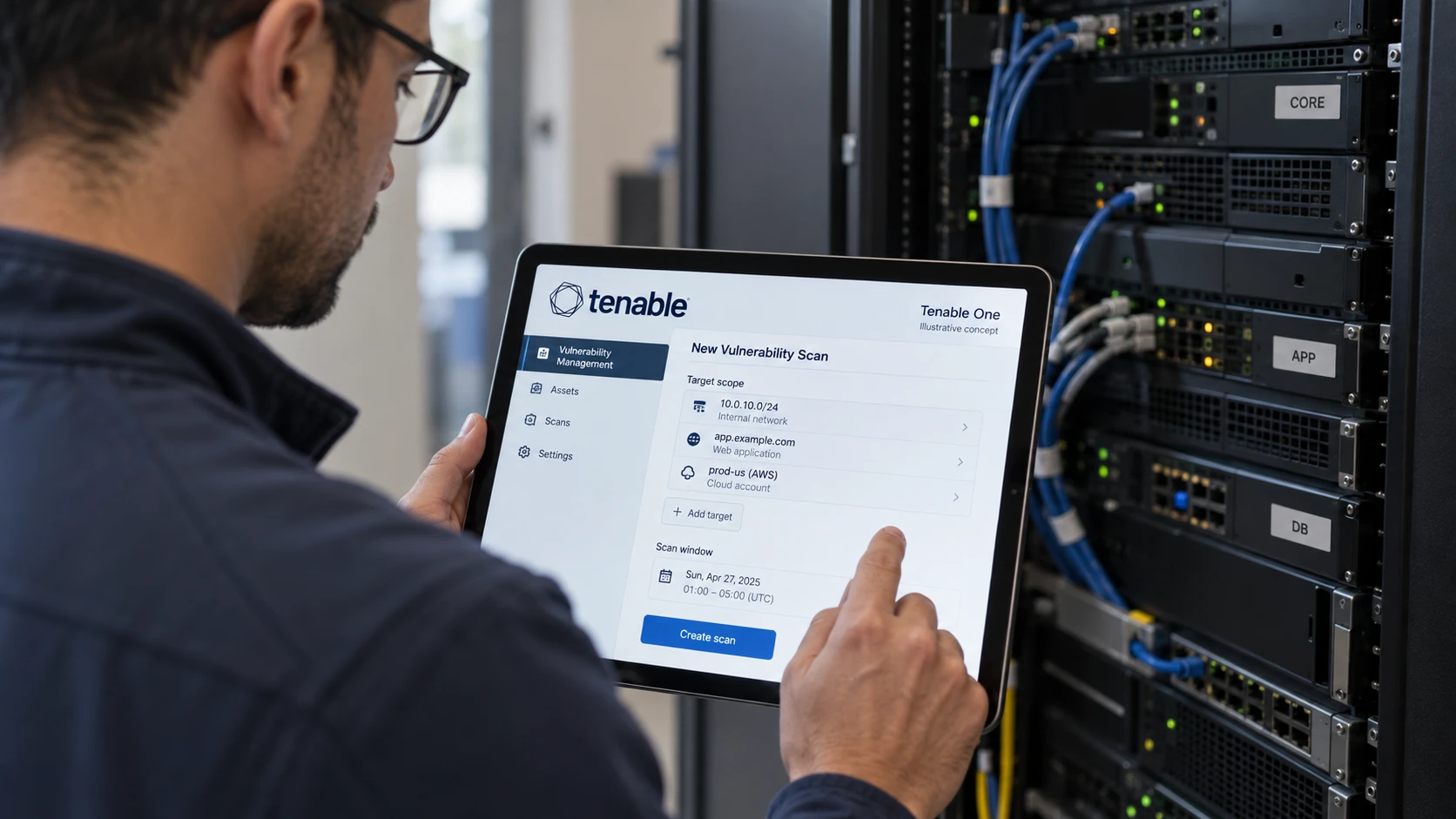
The cover image is an AI-generated editorial illustration. Screens and documents are illustrative concepts.
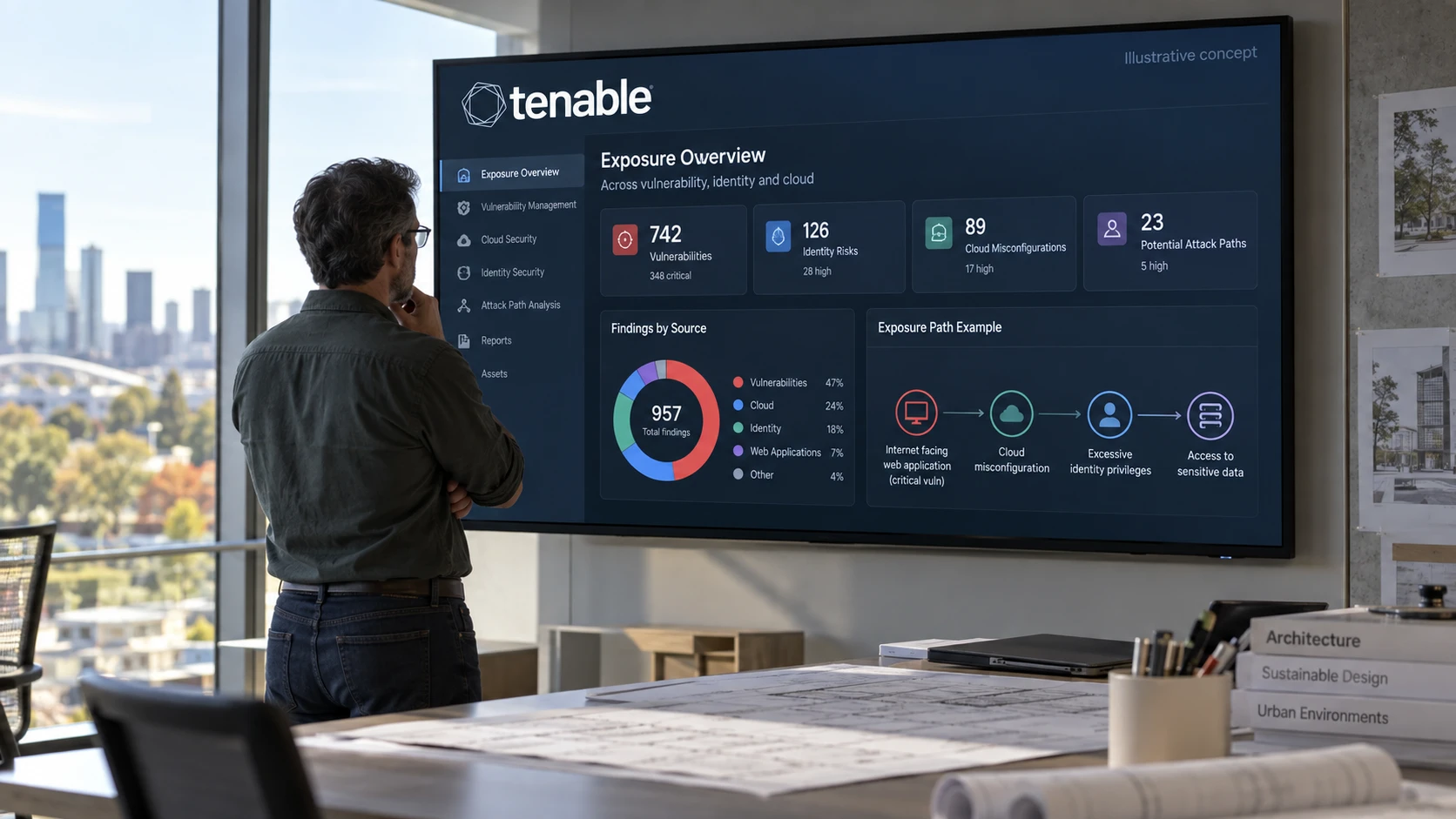
The first vulnerability assessment should leave you with a reliable baseline and an actionable plan. A large report is not enough if it omits important systems or cannot explain whether checks completed successfully.
Tenable One can support several assessment areas. Decide which are needed and licensed before treating them as part of the engagement.
Define scope and operating conditions
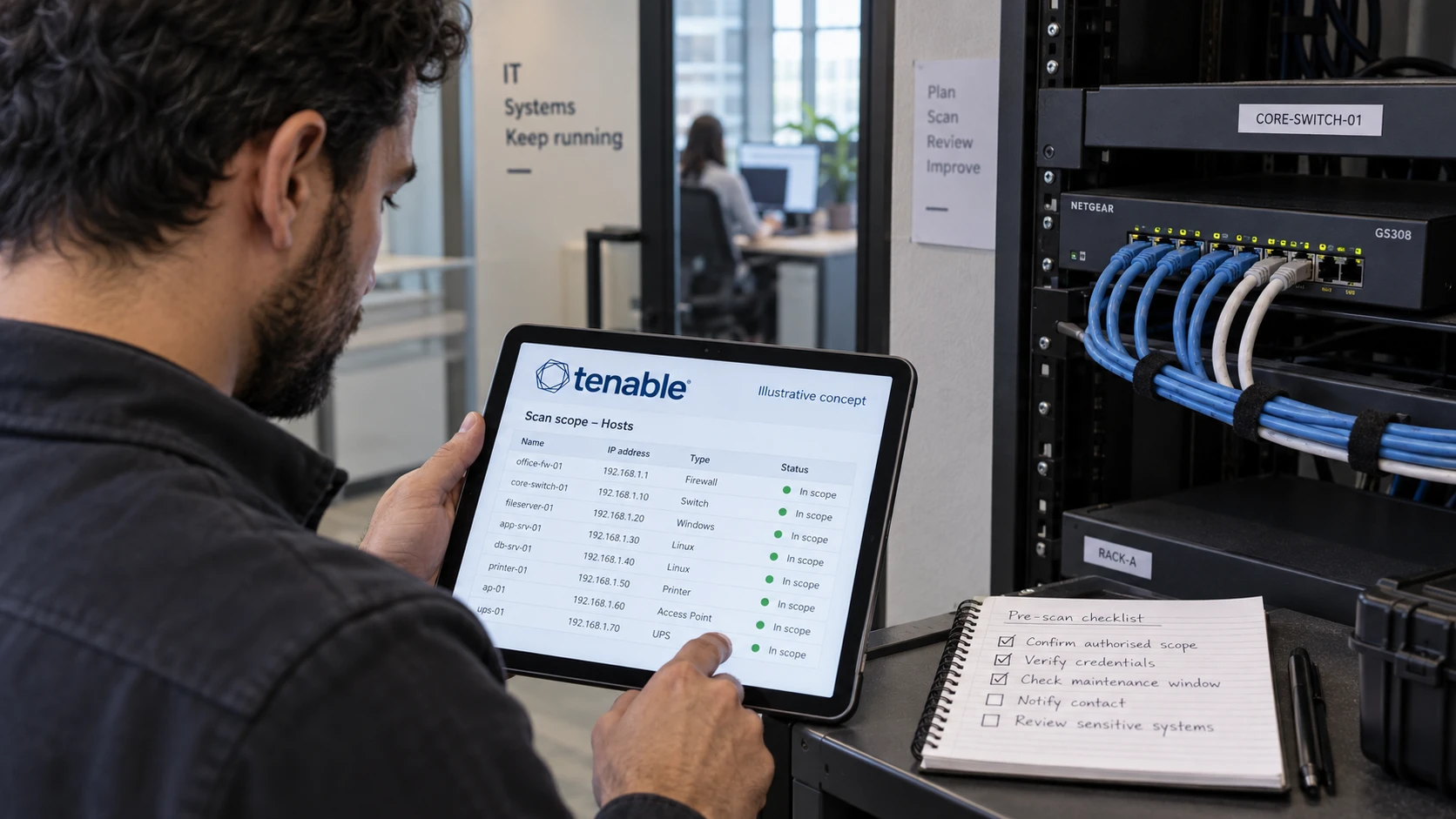
Record authorised IP ranges, domains, applications and cloud accounts. Identify suppliers whose permission is required. Include known dependencies and exclusions; an old lab system is still relevant if it can reach production.
Assign a technical contact and agree scan windows, rate limits, stop conditions and the handling of sensitive results. Fragile devices and operational technology may require a separate method rather than a standard active scan.
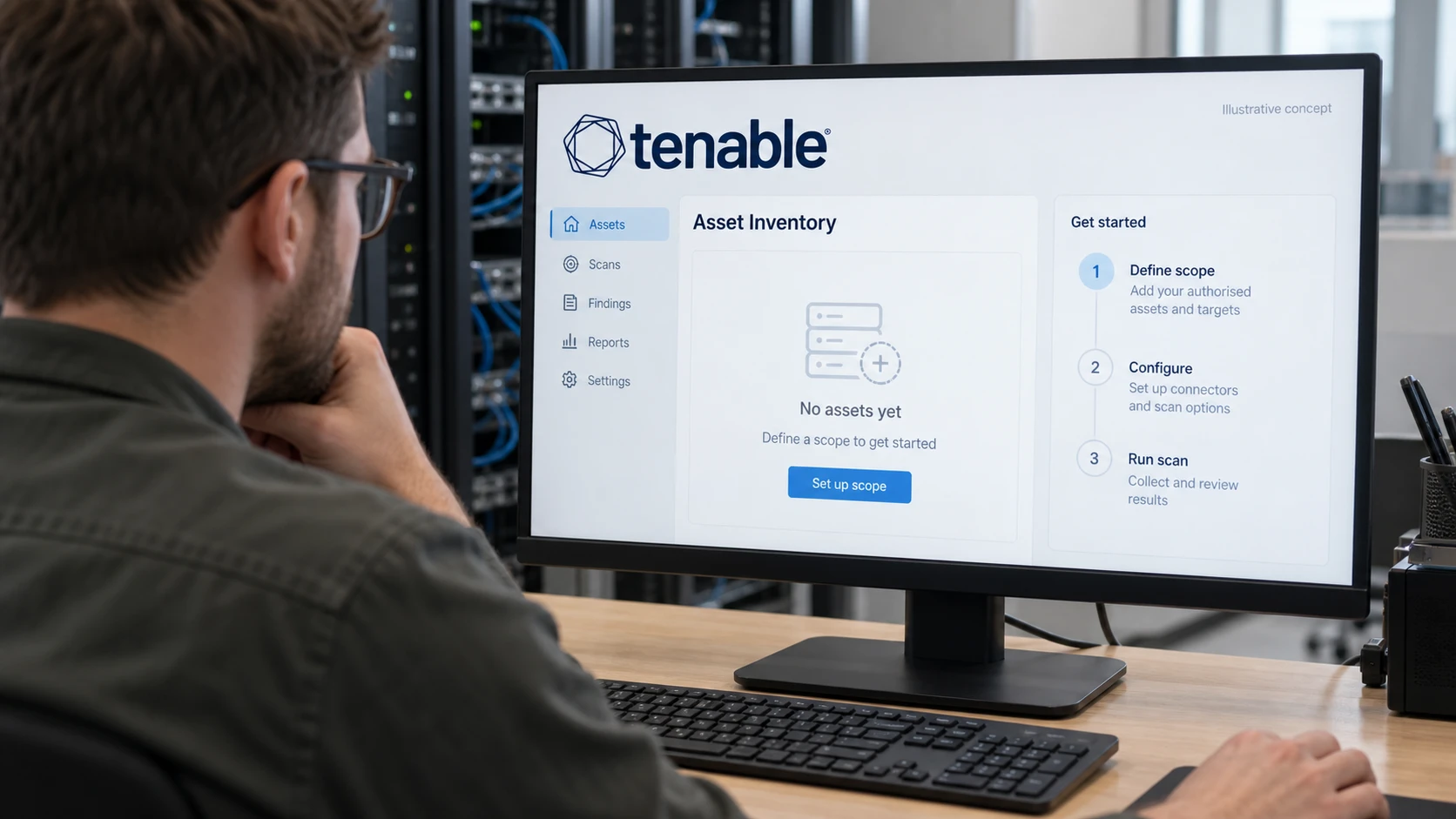
Compare the inventory with directory, cloud and network records. Treat newly discovered assets as items to validate, not automatic permission to scan them.
Configure collection for the question
External scanning shows services reachable from the scanner’s location. Authenticated checks can inspect local state that an external view misses. Tenable’s Windows guidance describes permissions and prerequisites; an ordinary read-only domain account is not a universal recipe.
Protect scan credentials and verify successful authentication. Cloud, web and identity assessments have their own deployment requirements. Do not assume a single collector or permission set covers all of them.
Validate before prioritising
Check scan completion, authentication failures, duplicate assets and findings based on uncertain version information. A scan that failed to reach a host cannot establish that it is clean.
Keep the original evidence when marking a false positive or accepting a compensating control. An internal tool being expected does not make its vulnerabilities harmless.
Then connect findings to exploitation evidence, access paths and business impact. Group remediation where one change fixes several findings, and involve the system owner in assessing operational risk.
Hand over a baseline that can be repeated
The handover should contain scope and gaps, collection methods, important findings, owners, target dates and exceptions with review dates. Include the configuration needed to repeat the assessment and verify fixes.
Agree the schedule from access readiness, system sensitivity and the work involved. A two-week engagement may suit a bounded scope, but it is not a guarantee for every environment.
The next step is ongoing vulnerability management: maintaining coverage, acting on new findings and checking that remediation is effective.