Make security evidence useful to the business
Clear security records help answer customer and investor questions. Build evidence around the controls you operate, with owners and an honest view of gaps.
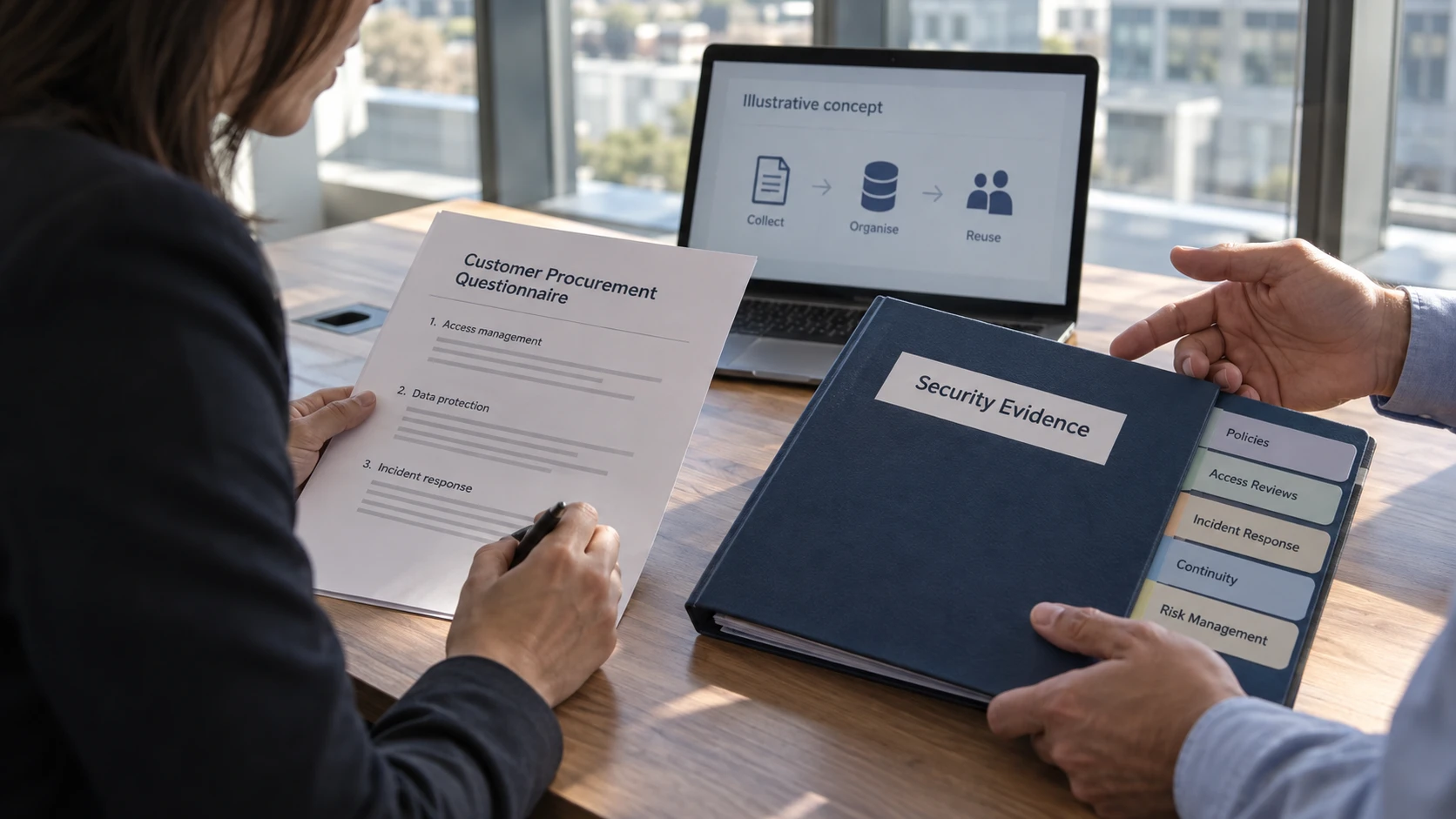
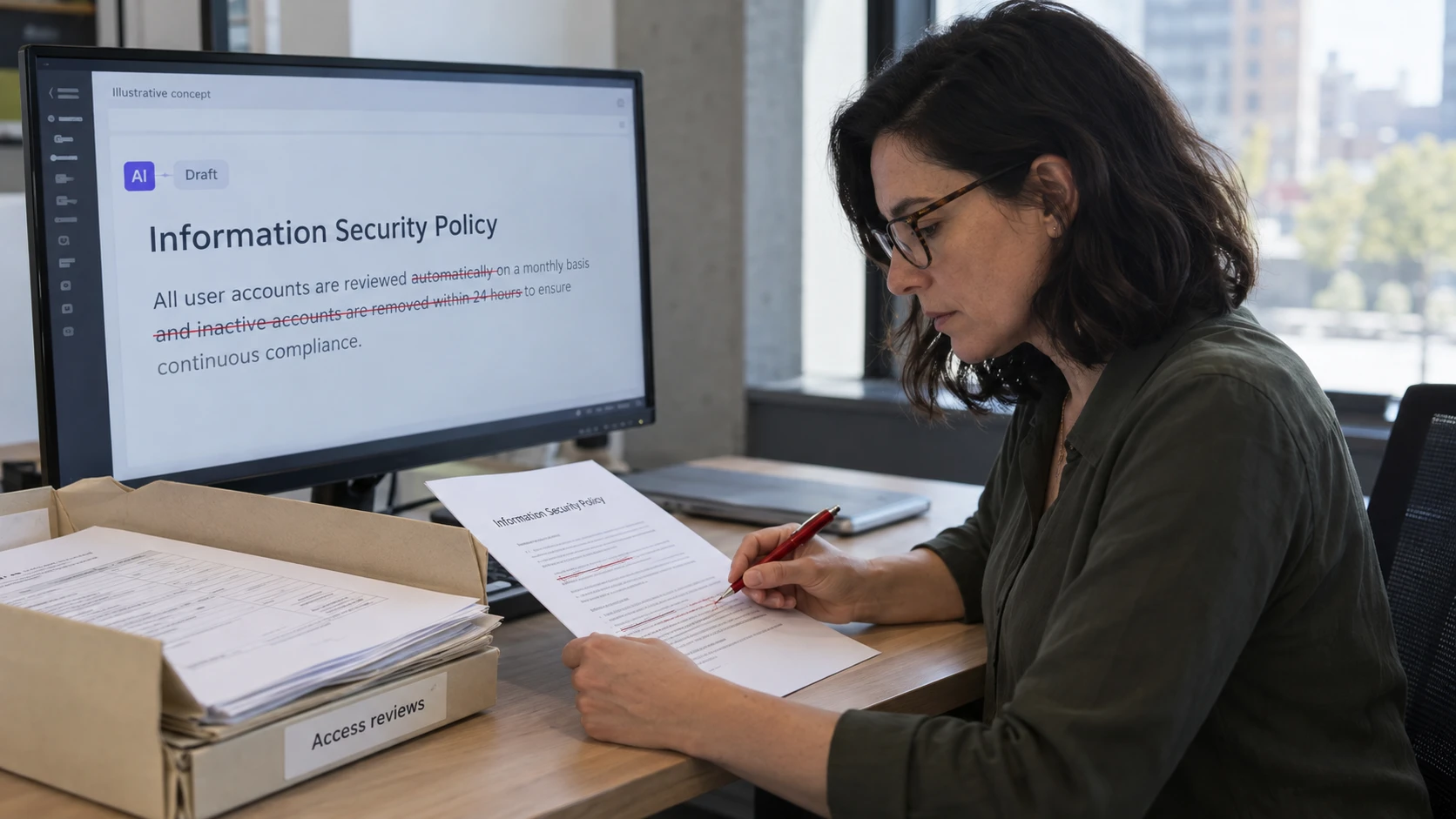
The cover image is an AI-generated editorial illustration. Screens and documents are illustrative concepts.
A customer questionnaire is harder to answer when the evidence is scattered across inboxes and individual laptops. The business may have good controls and still struggle to explain them.
Organised evidence can make that conversation easier. It gives management, customers and investors a clearer view of how security is run and where work remains. It cannot guarantee a contract or a valuation.
Build a record that answers a question
Start with the decisions people need to make. A buyer may ask how access is removed when staff leave. A board may need to know whether critical services can be restored. An auditor may need to examine how an identified risk was treated.
For each question, identify the control owner, the records that demonstrate operation and how current those records need to be. This produces a more useful evidence set than collecting everything a platform can export.
A policy explains the intended process. A dated review, correction or exercise result helps show whether the process happened.
Use automation where it adds reliable coverage
A GRC tool can organise records, connect to technical systems and remind people about recurring tasks. Before relying on a green status indicator, understand what the check measures.
Does the integration include every relevant system? Does it detect failed collection? Who handles an exception? Some controls need judgement, interviews or observed exercises; an API connection cannot answer them by itself.
Choose tooling around the workflow and data-handling requirements. Headcount alone is not enough to determine which platform fits.
Reuse evidence without confusing obligations
A single access review may support several assessments. Keep one authoritative record and map it to the relevant requirements.
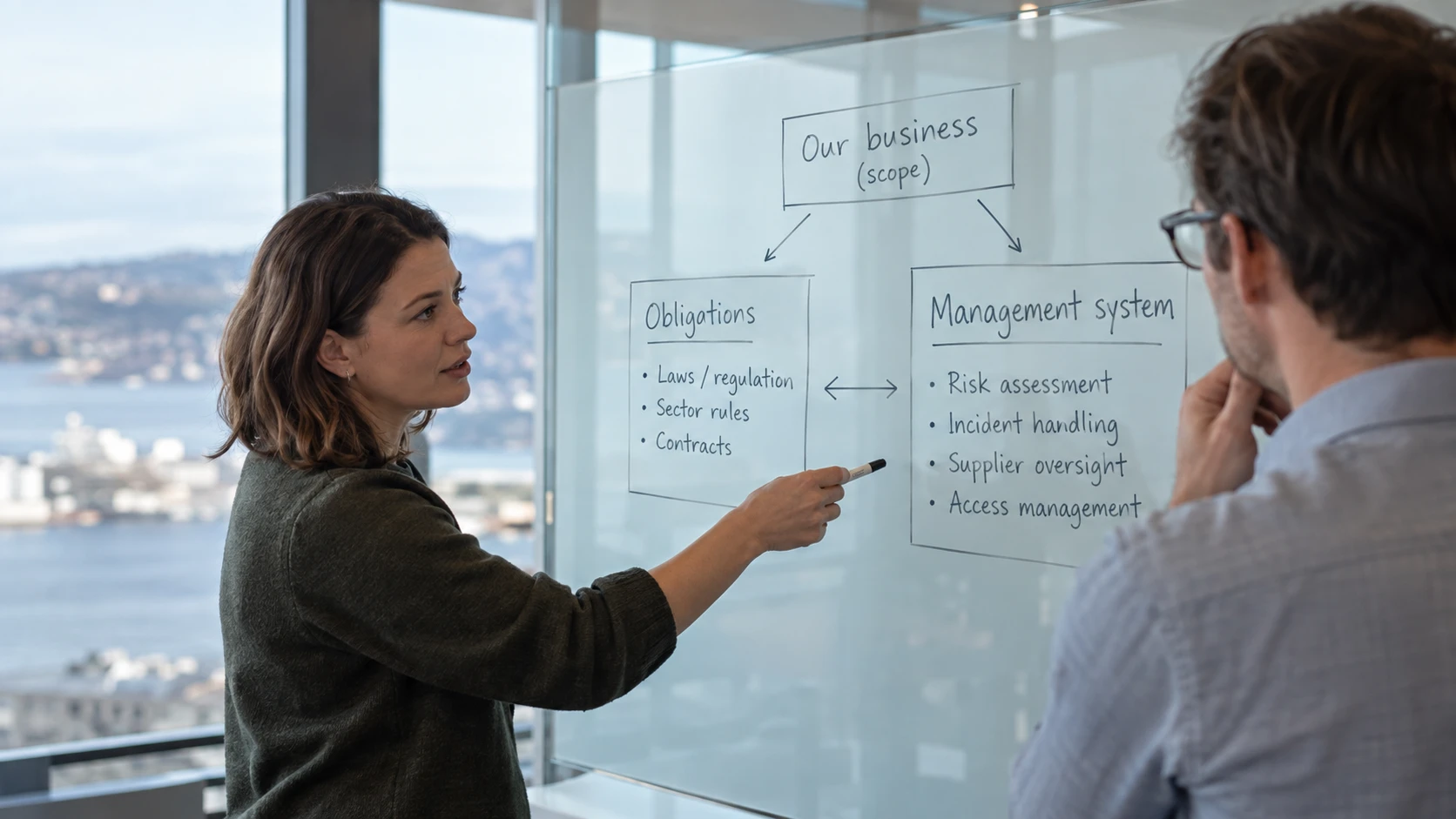
That does not make ISO 27001, SOC 2 and legal obligations interchangeable. ISO 27001 concerns a management system; each additional framework needs its own scope assessment and gap analysis. Reporting duties and sector-specific requirements can remain even when the underlying controls overlap.
Give management a decision, not a document count
A useful status report identifies significant gaps, their business consequences, the proposed action and the person who needs to decide. Include overdue work and accepted risk.
Measure progress through completed improvements and reliable recurring processes. The number of policies uploaded says little about whether access was removed or a restore succeeded.
The ISO 27001 checklist is one way to organise this work. The aim is a body of evidence the business can maintain and explain when someone asks.