For the complete documentation index, see /llms.txt. Markdown version of this page: /en/insights/exposure/exposure-management-vs-vulnerability-management.md.
Exposure Management ↗

Exposure management vs vulnerability management, why the terms are not the same

Vulnerability management tells you what is broken. Exposure management tells you what can hurt the contract you just signed.

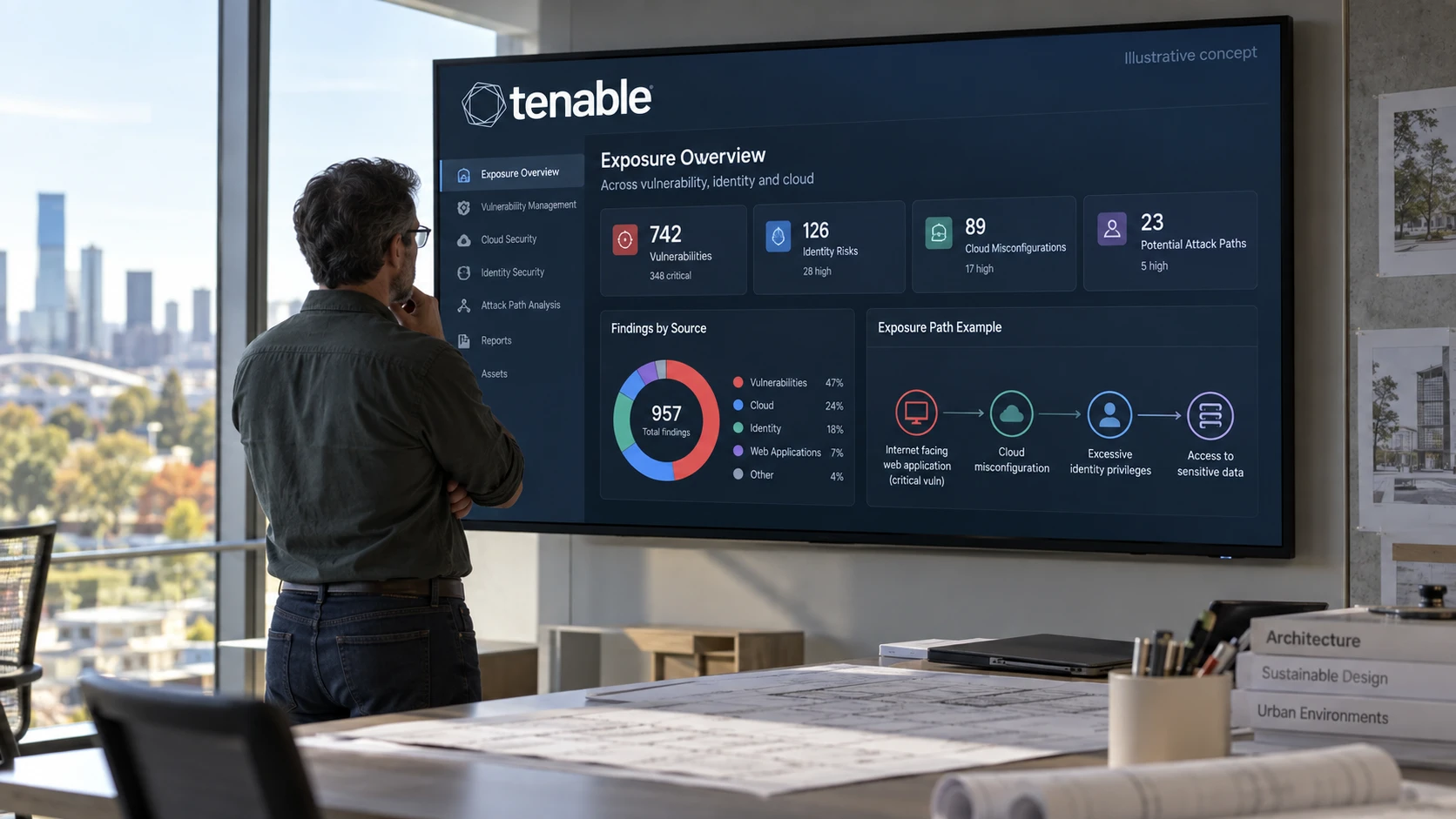
Tenable logo and Exposure vs Vulnerability, FM CyberSecurity branded cover

Vulnerability management tells you what is broken. Exposure management tells you what can hurt the contract you just signed. The two are not synonyms, and the difference matters before you sign the next procurement order.

TL;DR: Vulnerability management ranks findings by technical severity (CVSS). Exposure management layers exploitability, attack-path mapping, identity exposure, and business context on top, so the list the board sees is the list that can hurt the business. It is not a replacement for vulnerability management. It is what vulnerability management has to become when the scanner output exceeds the time available to read it.

Across the assessment work I have advised on this year, the gap I see most often is not technical. The scanner runs. The findings land. Then the security lead walks into a board meeting holding 6,000 lines of CVSS-ranked output and gets asked a question the scanner was never built to answer: which of these threaten the customer commitments we just signed. The conversation stalls there. The board does not want a longer report. The board wants a shorter list with confidence behind it.

That is the gap exposure management is meant to close, and it is also why vendors started using the phrase. The phrase has been used loosely enough that it now reads like marketing. It is not. The operational distinction is real.

Tenable logo and Exposure vs Vulnerability, FM CyberSecurity

What vulnerability management does well

Vulnerability management is the working programme that most security-aware Norwegian firms already run, or know they should. You scan the estate. The scanner returns a list of Common Vulnerabilities and Exposures (CVE) findings, each scored against the Common Vulnerability Scoring System (CVSS). You prioritise from Critical down. You patch.

That programme is necessary. Auditors expect it, ISO 27001 expects it, customers in procurement ask for it. The Nessus scanner that sits under most Norwegian vulnerability programmes has been the recognised baseline for two decades, and rightly so. If you are not running a vulnerability programme at all, that is the first thing to fix, and we wrote up how we run one in how we run the vulnerability programme in Tenable One.

The constraint is not the tool. The constraint is what CVSS measures. CVSS scores a vulnerability in the abstract, on a public scale, without knowing anything about your environment. It does not know which of your servers runs the payroll system you promised a customer would have 99.9% availability. It does not know which database holds the data you committed to keep inside the EEA. It does not know that the host with the Critical finding has been air-gapped for three years and the host with the Medium finding sits on the internet.

In one composite engagement with a Norwegian software firm this quarter, the initial scan returned 4,800 findings against a 230-asset estate. Sorted by CVSS Critical and High, the list was 420 long. The team had been working through it top-down for two months. Nobody had asked which findings sat on the systems named in the firm’s largest customer contract. The answer turned out to be 38.

What exposure management adds

Exposure management starts from the same scan data. It then asks four more questions before anything reaches the board.

First, is this exposure exploitable today. The Exploit Prediction Scoring System (EPSS) and the US Cybersecurity and Infrastructure Security Agency’s Known Exploited Vulnerabilities (KEV) catalogue both publish daily evidence on which CVEs are being weaponised in the wild. A CVSS 9.8 with no public exploit and an EPSS below 0.01 ranks below a CVSS 7.0 that has working exploit code and active exploitation in the wild. CVSS alone does not tell you that. Exploitability data does.

Second, where does this exposure sit on an attack path. Tenable’s attack-path analysis maps the route an attacker could take from an internet-facing asset to the systems that matter, across roughly 150 documented attack techniques aligned to MITRE ATT&CK (per Tenable’s Tenable One product page). A Medium finding two hops from a domain controller can be more dangerous than a Critical finding sitting alone on an isolated host. Vulnerability management on its own does not draw that graph.

Third, what is the identity surface around the exposure. Tenable Identity Exposure looks at Active Directory and Entra ID configurations, over-privileged accounts, weak password policies, and stale trust relationships, and shows where an attacker who lands on a vulnerable host could pivot. This is identity exposure visibility, not identity control. FM CyberSecurity’s identity practice runs on CyberArk for privileged access management. Tenable Identity Exposure tells you where the gap is. CyberArk is how you close it. Two different problems, two different tools, and conflating them in a board paper is a mistake I see often.

Fourth, which business asset does this exposure sit on. This is the tagging work, and it is the unglamorous half of the job. In the same composite engagement above, tagging assets against the four critical business systems named in the customer contract reduced 4,800 findings to 38 in roughly six hours of analyst time. The other 4,762 are still being worked through. They are not what the audit committee reviews.

Why the distinction matters in a tender response

When a Norwegian buyer issues a tender or a customer sends a security questionnaire, the question they ask is rarely “do you run vulnerability scans.” It is some variant of “describe your process for identifying and remediating exposure to the systems supporting our contract.” The vulnerability programme answers the first half. The exposure management programme answers the second.

Across procurement questionnaires I have reviewed this year, roughly two-thirds now ask about business-context prioritisation or attack-path awareness in some form (composite observation across roughly 15 questionnaires). The vocabulary varies, the intent does not. The buyer wants to know that the vendor is not just running scans and filing reports, but is making decisions about which findings get fixed first based on which systems carry their data.

If the answer in your tender response is “we run monthly Nessus scans and patch Critical findings within 30 days,” that is a vulnerability programme answer. It is true, it is auditable, and in 2026 it is increasingly thin against the question being asked.

What FM CyberSecurity runs

We standardised on Tenable because the platform pulls vulnerability findings, web application findings, cloud misconfiguration, identity exposure, and attack-surface findings into one risk view, and we operate the platform end-to-end for the firms we work with. We do not resell it. The reasoning behind the choice is in why we picked Tenable for exposure management. The way the three product layers, Nessus, Tenable Vulnerability Management, and Tenable One, relate to each other is in Nessus vs Tenable Vulnerability Management vs Tenable One.

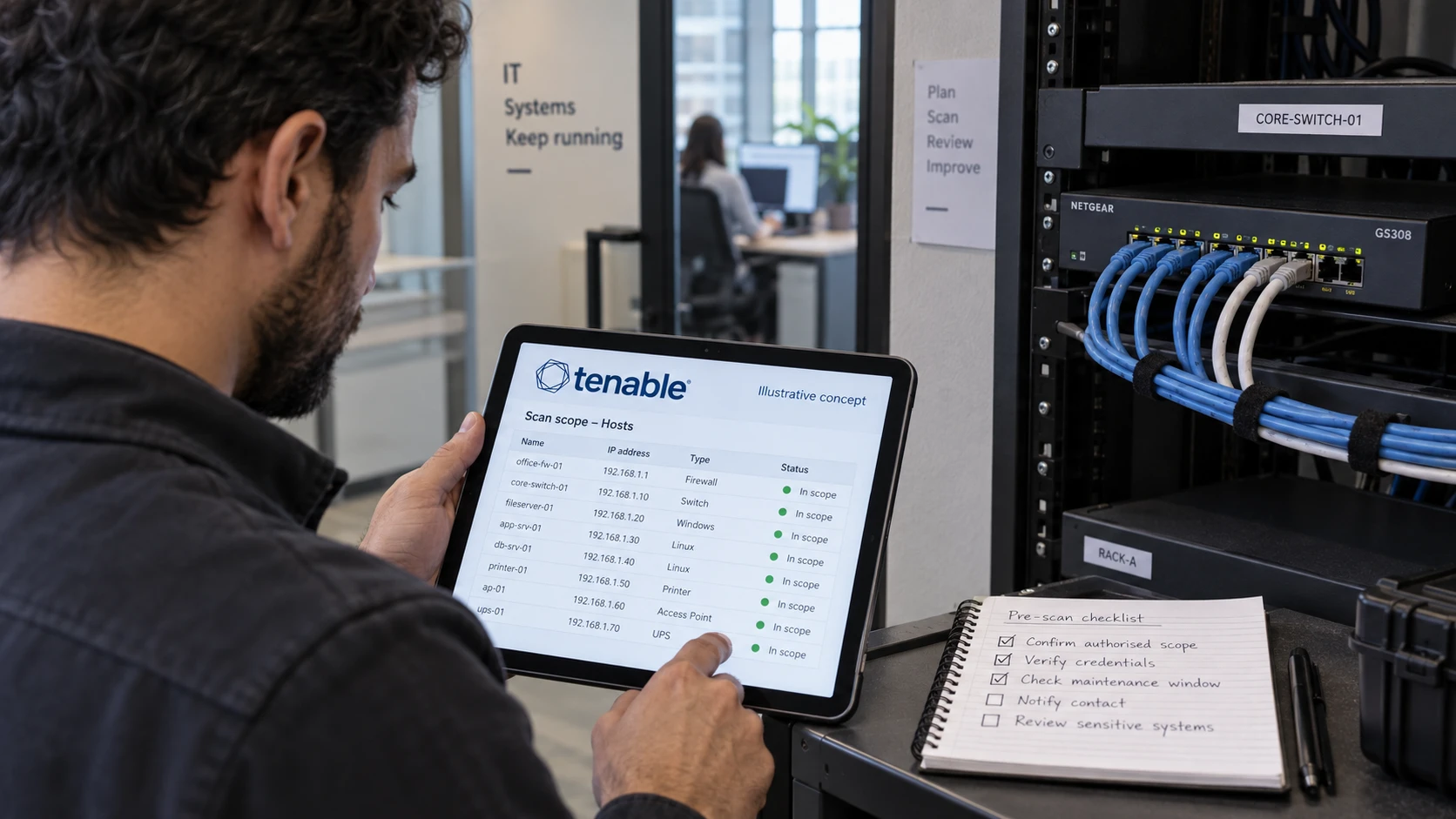
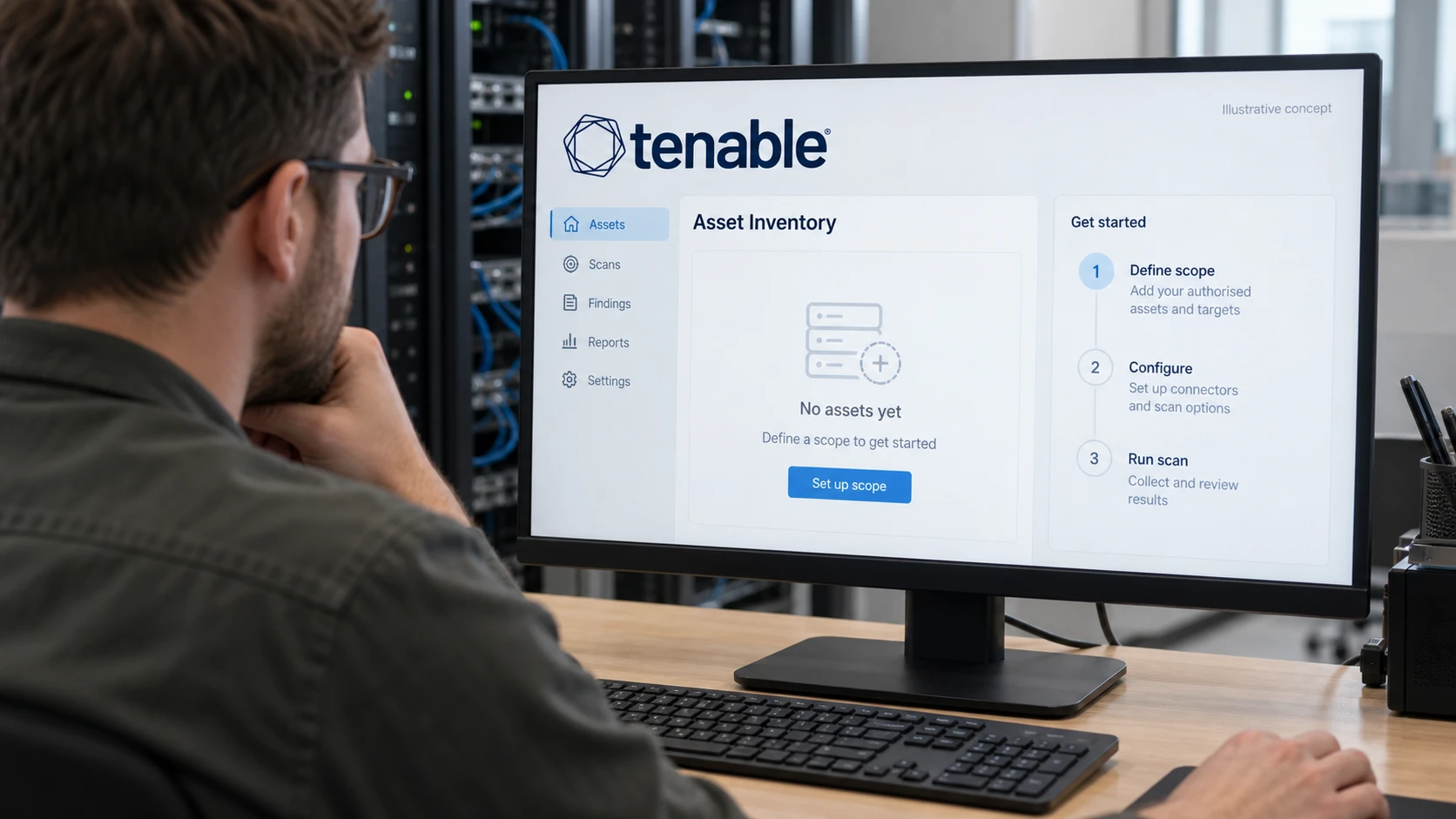
The work we do on top of the platform is the part that turns it into exposure management rather than just vulnerability management with more dashboards. We tag assets to business systems and customer contracts. We tune scan policies so the platform asks the right questions of the right hosts. We write the quarterly board paper that names exposure trend, new exposure on systems that came online, and any item that crosses an agreed escalation threshold. The first scan of a new engagement is the easy part. The translation into a decision the board can act on is the work. We described how we set up the first one in first vulnerability assessment in Tenable One.

The consequence

If you treat exposure management as a vendor rebrand of vulnerability management, you keep paying for a longer list of CVEs that nobody on the board has time to read. The audit finding clears. The contract risk does not.

If you treat exposure management as what it is, the operational layer that turns scan output into business-prioritised decisions, you end up with a shorter list with more confidence behind it, and you can answer the procurement questionnaire honestly. That is the version of the programme worth running.

If this resonates:

  • Read why we picked Tenable for exposure management for the procurement-side argument behind the platform choice.
  • Forward this to your compliance lead or the person who writes your security questionnaire responses, the gap between the two answers is where the work sits.
  • Talk to Anders for a 30-minute view on your current vulnerability programme and what it would take to layer exposure management on top, or book an exposure management assessment if you want a written gap analysis.
← Back to all insights
Questions or inquiry? [email protected] Contact us →